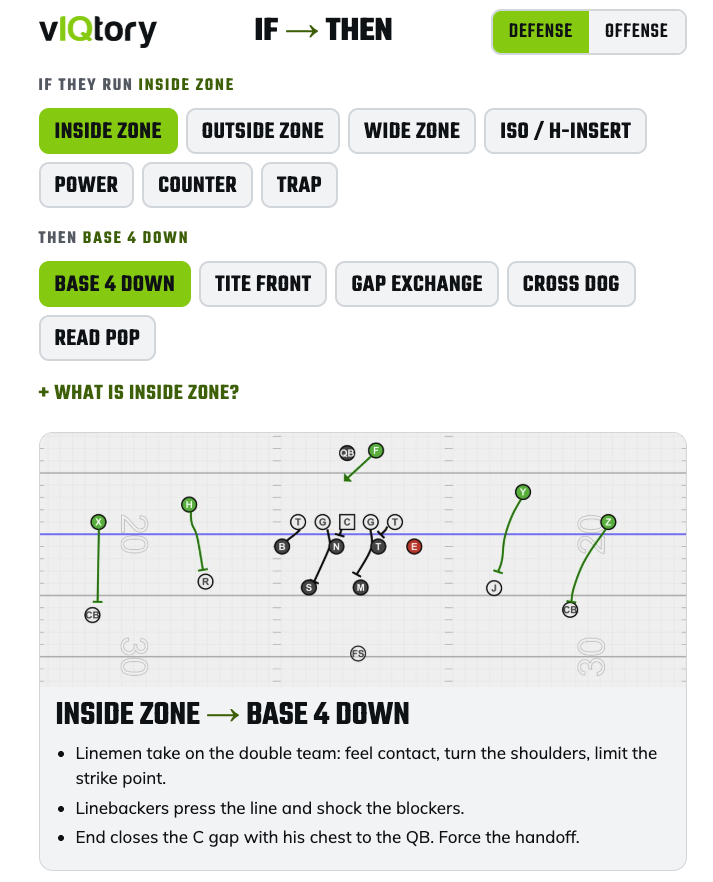
How To Coach Running Backs: Technique, Vision, & Ball Security
Running backs are often the best athletes on the field. Many coaches will find a way to get them the football to the outside and have them run around the entire defense. This works when the skill isn't caught up to your best player. But when it does, the running back needs to know how to make defenders miss, secure the football properly, and gain as many yards as possible on contact.
Below you'll find all the resources you need to coach any running back in any system. We'll show you proper stance and start, open field moves, blocking and ball security.
If you're looking for more in depth resources, see the full running back install inside of vIQtory Pro.
Core Running Back Skills
Below, we're going to detail the 4 core running back skills that you should teach, in order. It doesn't matter if you're a youth coach or a high school coach; these skills are applicable to all offensive players who carry the football.
Stance & Start
Stance and start are crucial for any position. Knowing how to generate force through the ground to gain as much as speed (as quickly as possible) is important for running backs who are running downhill.
Slow starts often produce less speed, meaning if the running back meets the linebacker in the hole, the linebacker will knock them backwards. Start in an athletic stance, shoulders over the toes, and push off the outside foot to begin the path to the football.
When taking a handoff, the top elbow should always go toward the quarterback. This creates a pocket where the quarterback can place the football.
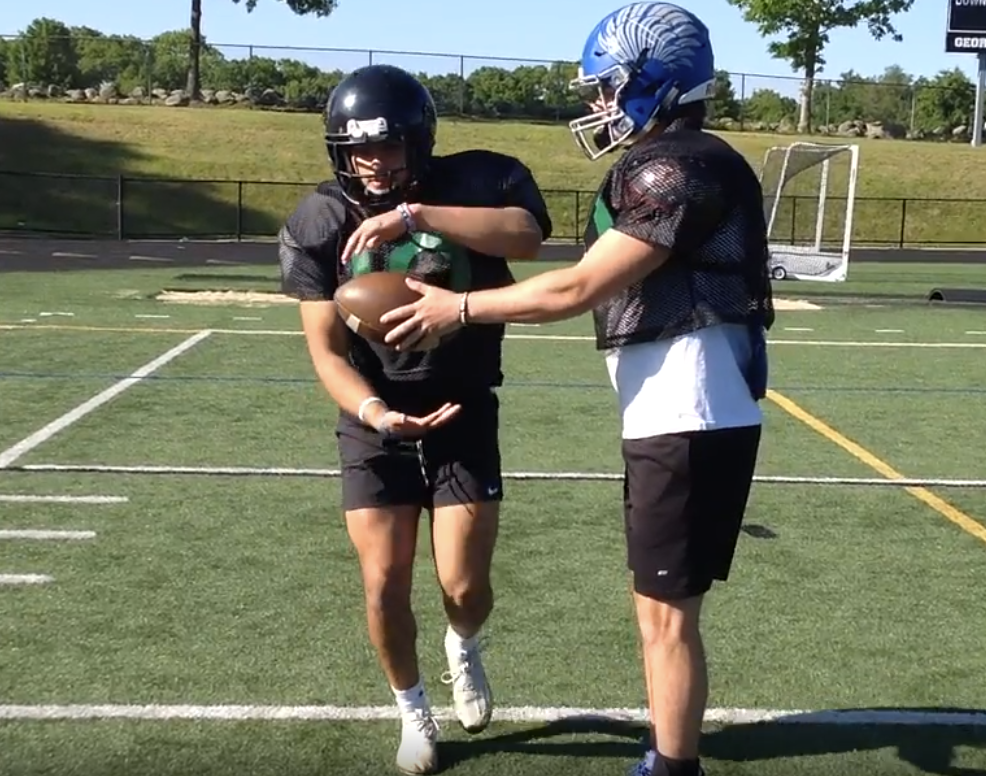
Correct way to take a handoff
If the running back does it the other way, their bicep will hit the football as it's exchanged from the quarterback. This is what often causes fumbles and bobbles. Here is an example of the incorrect way to take a handoff.
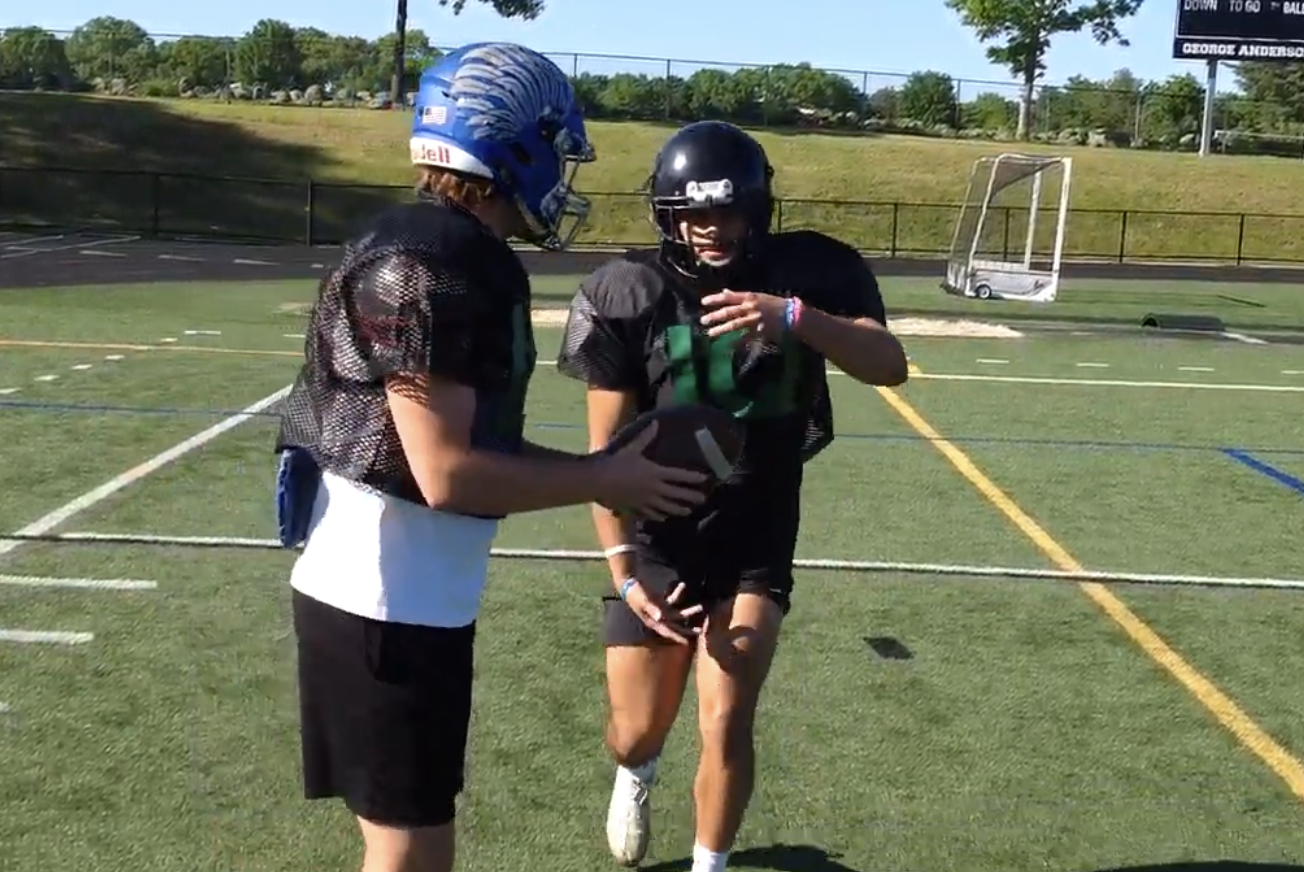
Incorrect way to take a handoff
The top elbow should always be facing the quarterback for a clean exchange. This is the number one coaching point for all running back coaches. Learn more about taking a handoff here.
Open Field Moves
Teaching players how to make defenders miss is often a split-second decision that must be made as the defender approaches. Knowing what moves to use and when is what separates good running backs from great running backs. Knowing when to cut back is just as important as knowing when to race the defender to the edge.
We like to give our running backs a toolbox full of moves, then they decide when to use each one. Football is a dynamic game, and situations are never the same. So running backs should practice on different angles.
Here are some of the most common open field moves:
- Juke
- Pressure Cut
- Stiff Arm
- Spin Move
- Lowering The Shoulder
Knowing when to use each move is key. If you want to go even more in depth with these open field moves, visit our running back open field guide here.
Blocking
Pass blocking and run blocking is important for the running back, as they won't always be the primary ball carrier. Having a running back who can block allows your pass game to add another offensive lineman. This means you can insert him into the protection.
When pass blocking, ensure that your chest is up and over your knees and elbows are loaded up and ready to strike. Similar to an offensive lineman, your running backs don't want to catch the contact; they should deliver it.
Learn more about pass blocking techniques here.
Ball Security
Last, and most important is ball security. If the ball is always on the ground, your offense isn't giving your team a chance to win the football. Fumbling can often be fixed by installing the 5-points of contact. The 5 points of contact are:
- Fingertip Contact
- Wrist Contact
- Forearm Contact
- Bicep Contact
- Chest Contact

Here is an example of how to properly hold the ball. Notice the top of the football is facing toward the sky. The main coaching point is to keep it facing up while running.
Often, it drifts away from the running back's body because it feels natural that way. This is the biggest cause of fumbles because it loses chest and bicep contact. One simple punch from the defender will knock it loose. Prevent this by having all 5 points of contact.
Running Back Coaching Progression
Below is the tested order we install each of our running back skills, so you can be sure that your ball carriers are prepped and ready for game day.
Steps To Install | Coaching Points | Player Progression |
|---|---|---|
Step 1: Stance & Start | Have the player in a 2-point or 3-point stance, based on what the play demands. | Running backs should not wait for the ball to be handed off, but rather run through the hole with their eyes up, reading the offensive linemen's blocks. |
Step 2: Open Field Moves | Put the running back in game-like situations where they have to use a move based on leverage. | Players should be able to make defenders miss and keep their legs moving. Broken tackles are a sign that players are building confidence using open-field moves. |
Step 3: Pass Blocking | Teach your players how to insert into the line of scrimmage and be a 6th lineman on pass plays. | Running backs should block defensive linemen with confidence, no matter their size. |
Step 4: Ball Security | Limit your fumbles by making sure all of your running backs have 5 points of contact at all points in time. | Fumbles should be reduced when players punch at it. Running backs should have the top of the ball facing the sky when they run. |
Common Mistakes Running Back Coaches Make
Not Working On Ball Security Every Day
Ball security is a skill you should work on every day. All it takes is one fumble to completely change the course of your season. 5 minutes a day is all it takes to reinforce good ball carrying behavior.
Teaching Skills Too Fast
Skills like stiff arming and jukes need to be worked at slow speed first (so the player understands why), then repped at full speed. At full speed, the body starts to understand why and how to cut back or race to the edge.
Using Too Much Equipment
This one is a bit controversial, but step over bags, chutes, sticks with boxing gloves, and all the other equipment coaches use don't appear on a football field. Train the running back to react to people, not medicine balls. Train the running back to protect the ball and make players miss in smaller environments (2v2 or 3v3 drills) before moving to 11v11.
Not Working With The Offensive Line Until Team Period
The running back should work on their steps and skills during iindividual period. Then, there needs to be a bridge period so the running back knows exactly where the hole is going to be and how the offensive line is going to block it. This will help the running back see where the cutback lanes are, where they can't run (backside on gap scheme plays), and help them see the play art.
Get More Drills & Video Instruction Inside vIQtory Pro
The Full Running Back Install: Get drills and video instruction on how to coach running backs. Inside you'll find a library of drills, progression on how to coach your position and game plan tools to put it all together on game day. Built for youth and high school coaches.
Coaching Resources
©2026, vIQtory Sports . All rights reserved
Follow Us