
The worst thing a running back can do is fumble. A majority of fumbles come from the quarterback and running back exchange.
Free Play Calling Guide
Know the exact play to call in every situation
- Pick the front you see. Get the plays that beat it.
- Pick the play they run. Get the stunt that stops it.
- Tap-to-answer tool for the sideline, plus the PDF for your binder.
In this article, we’re going to show you how to ensure that your running backs don’t fumble when they take a handoff and how you can ensure consistency.
This is one piece of the running back install. The full progression is in the guide on how to coach running backs.
Taking a Handoff
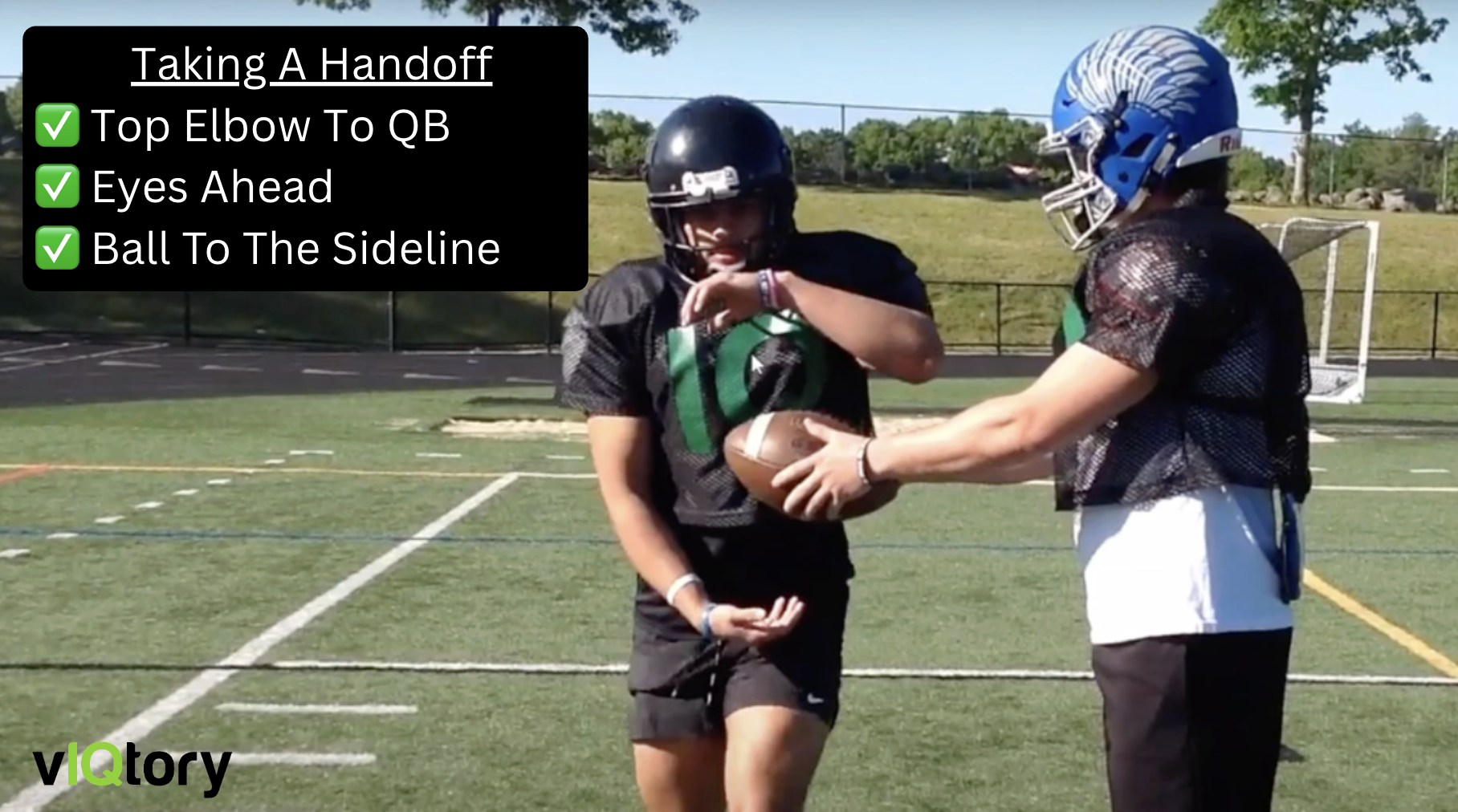
To take a handoff properly, your running back should always ensure that his top elbow is always toward the quarterback. The reason you want your top elbow toward the quarterback is that if it’s reversed, the bicep will get in the way of the handoff. This is what typically causes fumbles on the exchange.
Once the top elbow is toward the quarterback, the ball should be placed directly into the belly of the running back. The running back should then securely clamp down on the football.
The next part is extremely crucial.
Fumbles occur after the handoff because the ball is not secured with the 5 points of contact, or it’s not toward the sideline. The sideline is our friend; if a fumble occurs, the ball will go out of bounds.
It also allows us to use moves such as the stiff-arm. If the ball is inside, this restricts any move the running back can make.
For example, if the running back is running to the right side, the ball should be in his right hand. This means he can stiff-arm with his left hand and fight off any defenders that come close.
Transporting the ball from quarterback to running back is the most important, routine play in football. However, inconsistencies can stall your offense.
Free Play Calling Guide
Know the exact play to call in every situation
- Pick the front you see. Get the plays that beat it.
- Pick the play they run. Get the stunt that stops it.
- Tap-to-answer tool for the sideline, plus the PDF for your binder.
To learn even more running back techniques, read here: