
If you’re coaching youth football for the first time, there’s a moment that almost every new coach experiences.
Free Play Calling Guide
Know the exact play to call in every situation
- Pick the front you see. Get the plays that beat it.
- Pick the play they run. Get the stunt that stops it.
- Tap-to-answer tool for the sideline, plus the PDF for your binder.
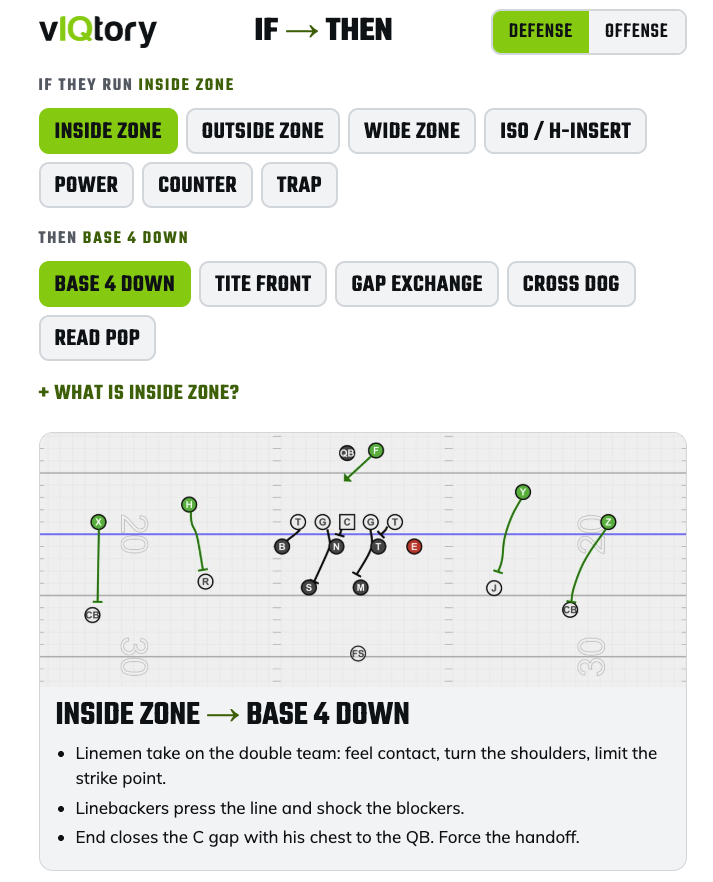
Your team lines up on defense for the first time, the ball is snapped, and suddenly the other team’s running back is sprinting down the sideline, and they score a touchdown.
Everyone looks at you. It’s one of the worst feelings as a defensive coordinator (I’ve coached youth and high school football, and it’s the same feeling at all levels).
This is extremely common for new youth coaches. The problem usually isn’t effort. The problem is that most youth defenses are too complicated for young players to understand.
Kids get confused about where to line up, what their responsibility is, and where to go after the snap. The solution is simple: Run a defense that is easy to teach and easy for kids to execute.
In this guide, we’ll walk through one of the best beginner youth defenses and how to teach it step by step.
Installing The 4-4 Defense
One of the easiest defenses for new youth coaches is the 4-4 Defense.
This defense is popular in youth football because it is:
- Easy to teach
- Strong against the run
- Balanced against the pass
It also fits the reality of youth football, which is that most offenses run the ball between off-tackle and to the outside.
The 4-4 defense has 4 players on the defensive line and 4 linebackers behind them.
This creates a strong wall at the line of scrimmage and allows linebackers to chase the ball to the outside.
Here’s how to build your youth defense from scratch:
Name Your Players
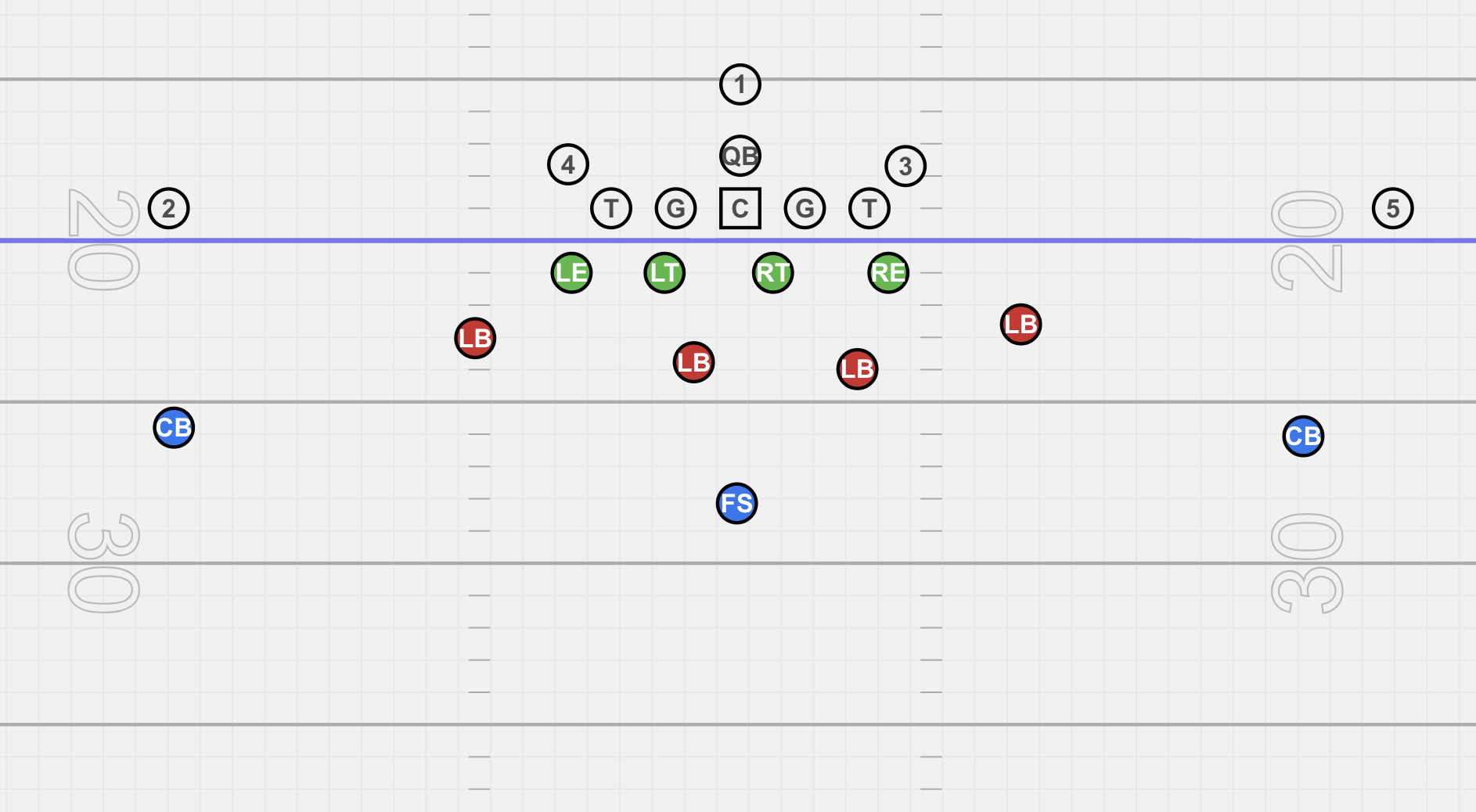
First, name your players. This is important because it allows you to coach a subset of players rather than trying to coach all 11 at once.
Here is a simple naming system to help your players get lined up properly.
Defensive Line
- Right Defensive Tackle
- Left Defensive Tackle
- Right Defensive End
- Left Defensive End
Linebackers
- Right Inside Linebacker
- Left Inside Linebacker
- Right Outside Linebacker
- Left Outside Linebacker
Defensive Backs
- Free Safety
- Left Cornerback
- Right Cornerback
Aligning The Defensive Front
When installing the defensive front, we’re going to show you 3 easy fronts that you can teach your players.
Base Front
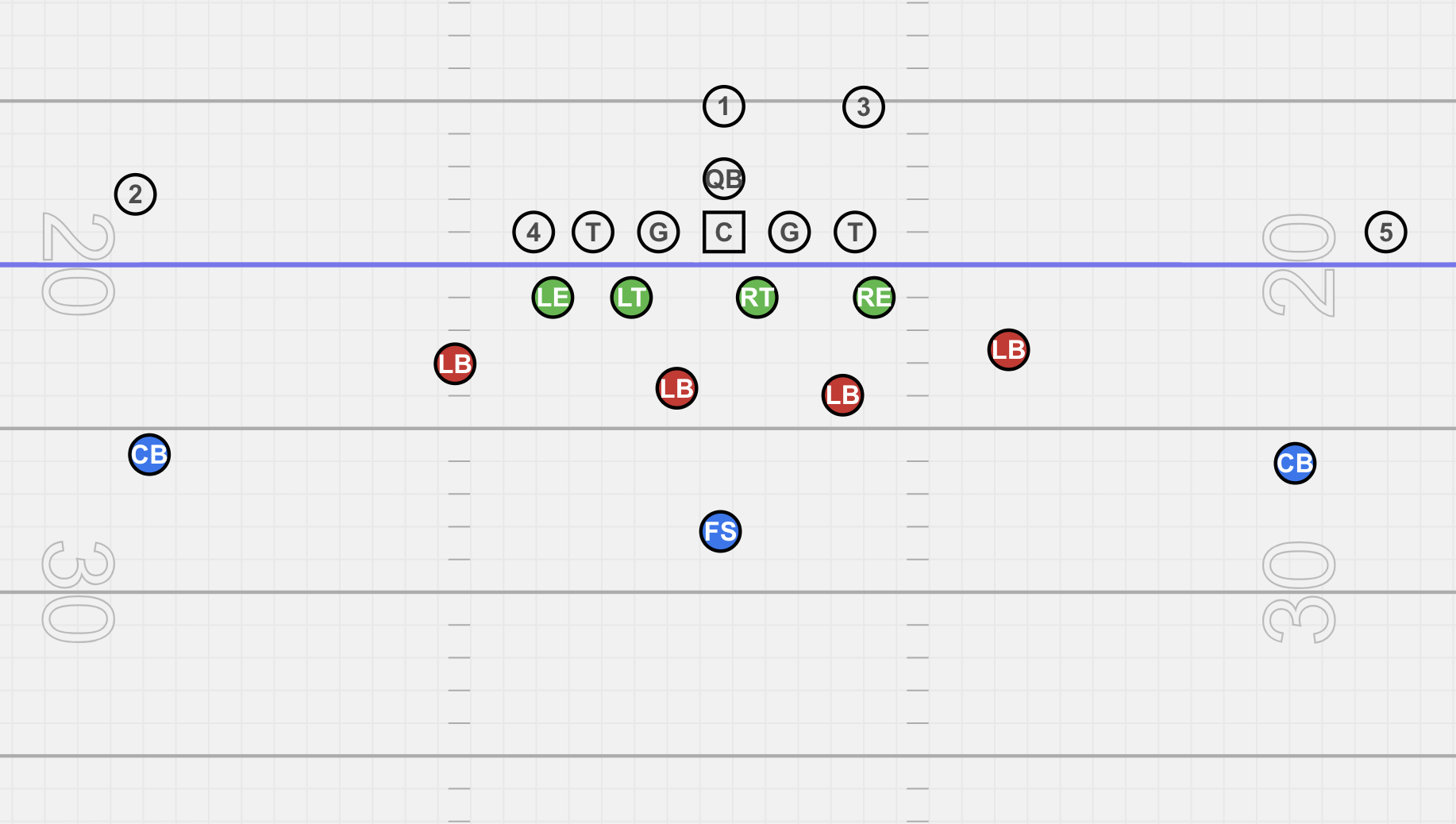
This front has one player on the outside shoulder of the guard. The other interior defensive tackle is on the outside shoulder of the center.
The player lining up on the outside shoulder of the guard should be on the strong side. This means to the side where there are more people on the line of scrimmage. In the example above, you’ll see the tight end (4) and is on the left, so the left defensive tackle is on the outside shoulder of the guard
Outside Front
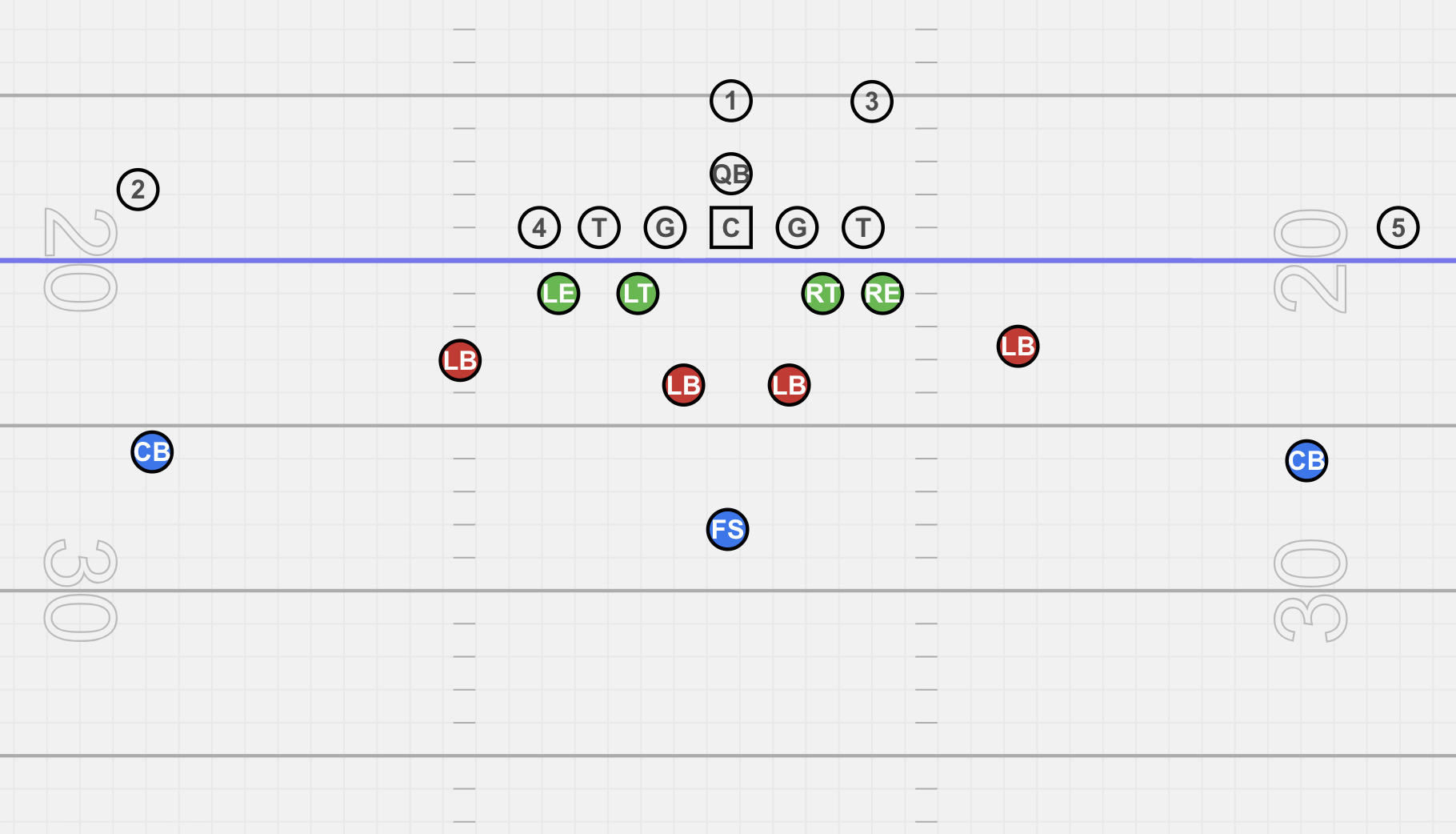
The outside front just tells your two interior defensive tackles they are both going to line up on the outside shoulder of the guards.
This front is great when you know the offense will throw the football. It is weak against runs up the middle.
Inside Front
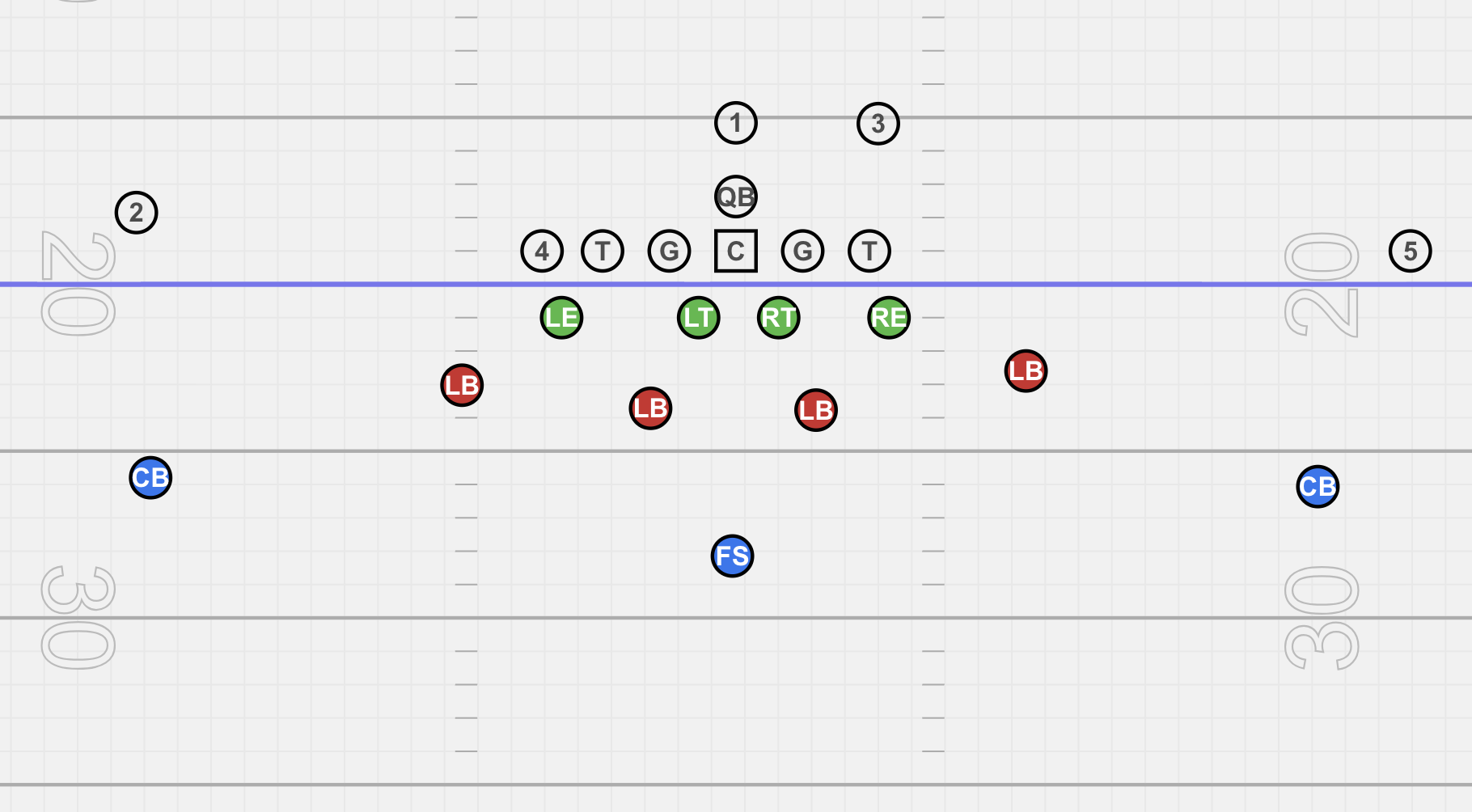
The inside front means that both of your defensive tackles are going to move to the inside shoulder of the guard. This front is great against inside runs, but not great against the pass.
Understanding Run Fits
Now that we have everyone aligned, it’s important that you understand run fits at the most basic level. Run fits are just a fancy term for each player owning a gap. Remember, running backs run through open space, called gaps. If there is no gap, the running back can’t score.
It’s our job as a defense to ensure every gap has a player in it. Let’s use our base front as an example.
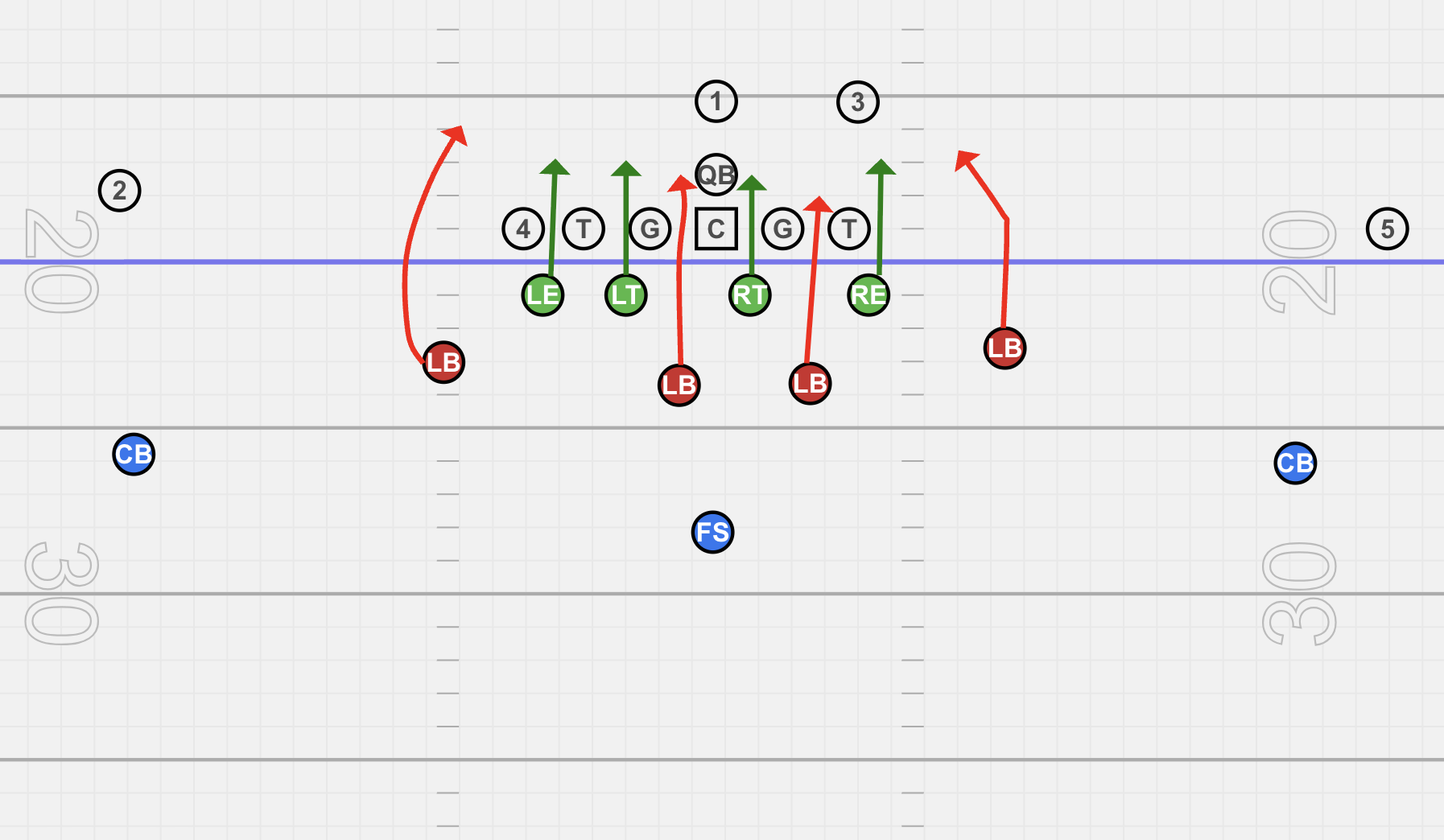
If you notice in the picture, before the ball is even snapped, every player owns a gap. This allows you, as a coach, to quickly identify when things go wrong (such as when a player may not cover his gap). This is how big runs happen, when players don’t cover their gaps.
So when the ball is snapped, every player should make sure the ball is not running through their gap, then locate the football.
Coverage
Next, we’re going to install the coverage. The base coverage in a 4-4 defense is Cover 3.
What is Cover 3? In its basic form, it means 3 players are going to cover deep, and 4 players are going to cover the zones underneath.
The defensive backs (corners and safeties) are going to split the field into thirds. That’s where the number “3” comes from in Cover 3.
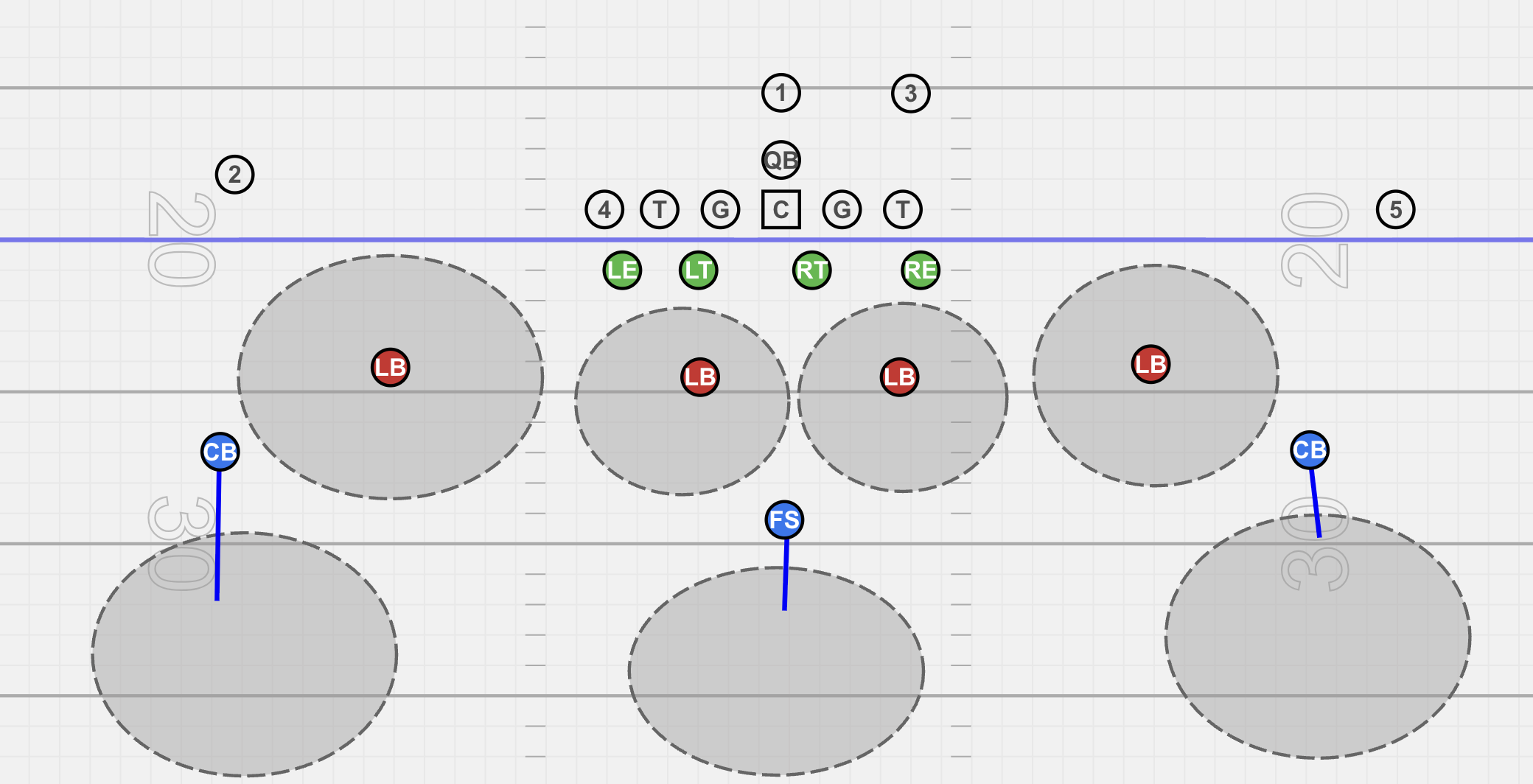
In Cover 3, the underneath defenders are going to cover the flats (the outside area) and the hook area. It’s important that your flat players extend out to the sideline, so they don’t get beaten on passes to the outside. This is the most common pass in youth football.
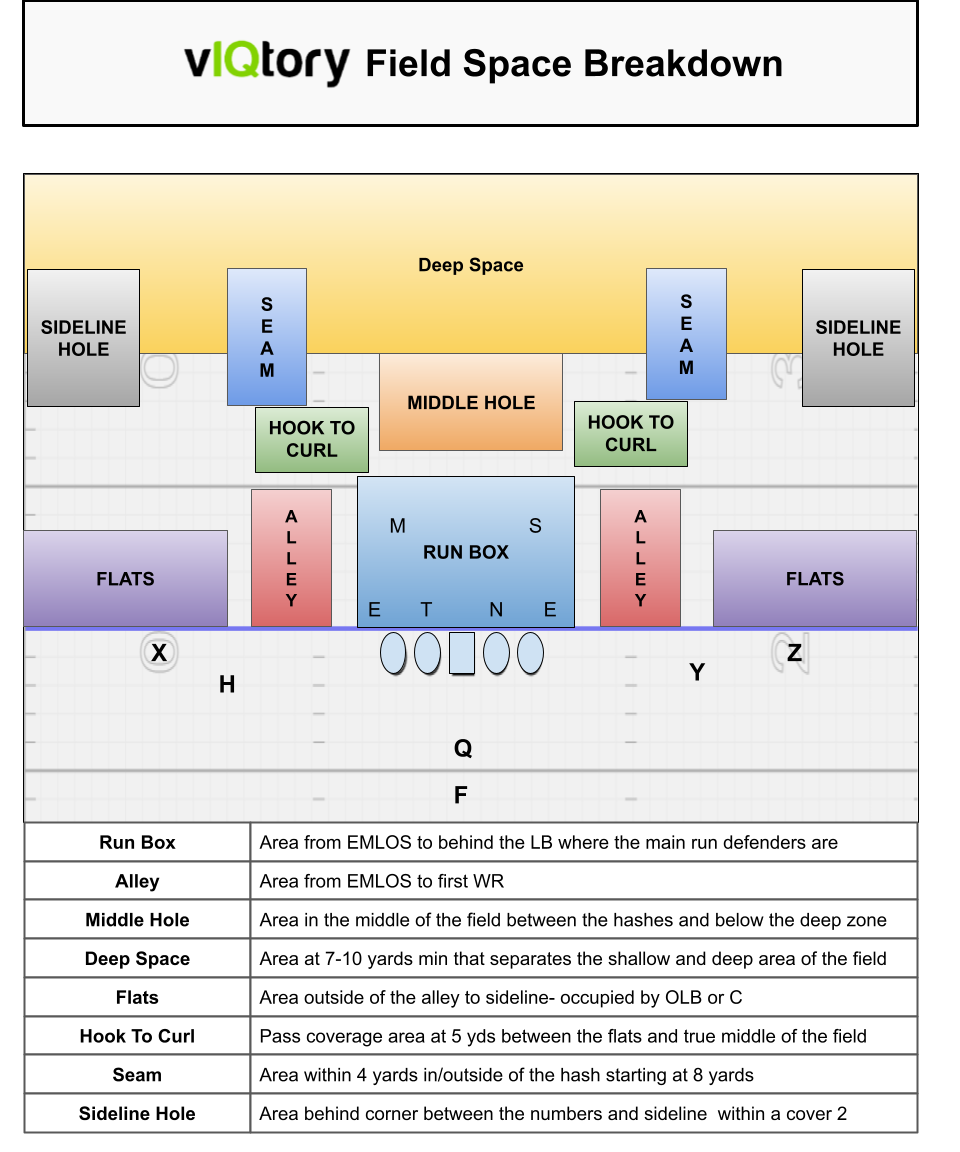
Here is a chart that will help you identify all areas of the field.
Installing Blitzes
Now that you have your base front and coverages installed, let’s install one blitz.
We’re going to call this a “Gap” blitz. The reason we call it a gap blitz is that the blitzing linebackers are going to blitz the gap they are responsible for in the run.
For example, if we line up in our base front. What gaps do the linebackers have for the run? A and B gaps.
So those are the gaps they are going to run through before the ball is snapped. The coverage behind it will be our normal Cover 3 coverage.
So the call would be Base Gap 3.
Base = Front
Gap = Blitz
3 = Coverage
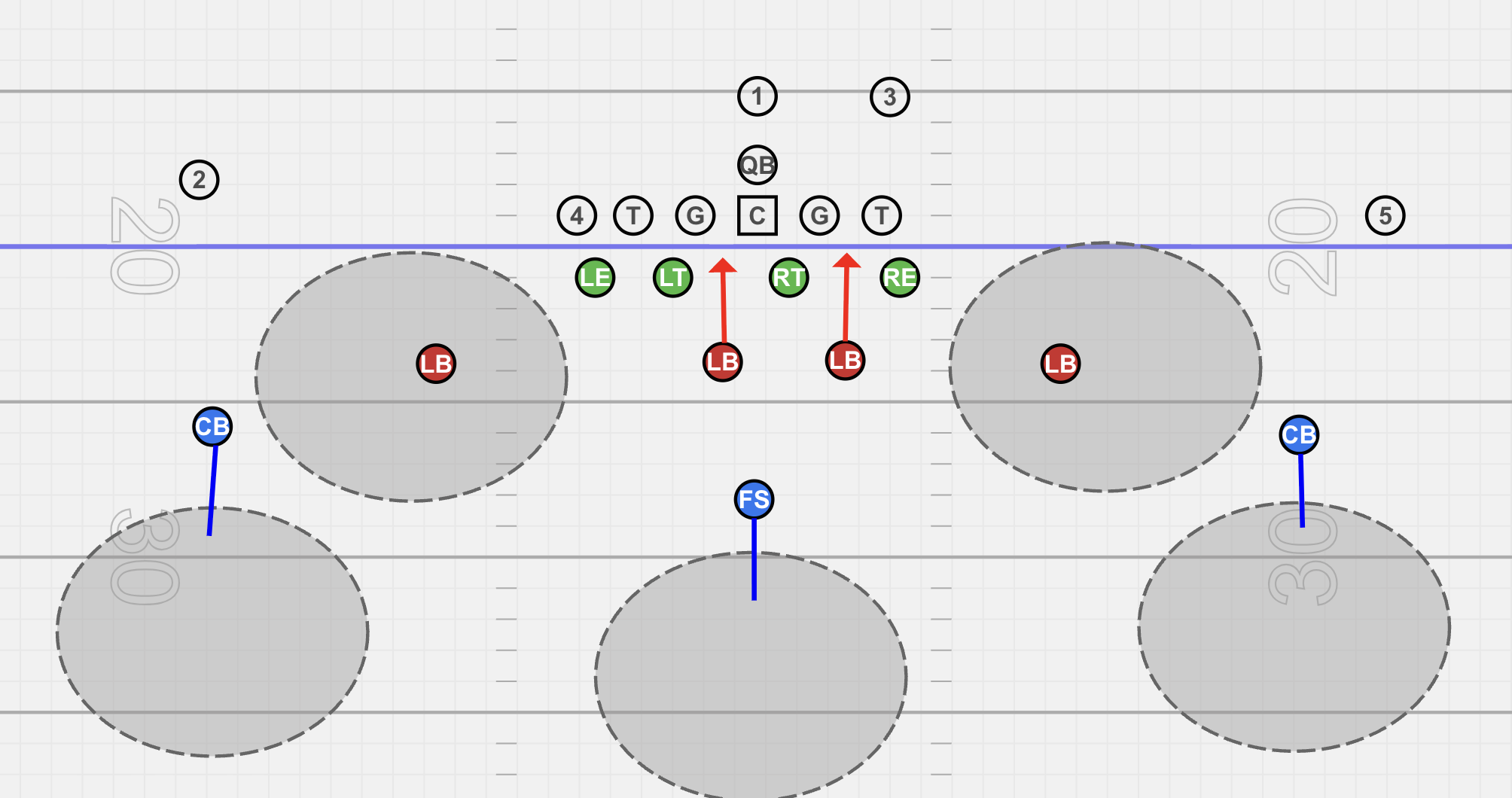
Simple, right? Let’s get a little more advanced…
If you call “Outside Gap 3”. What gaps would the linebackers have? If you guessed the A gaps, you are correct!
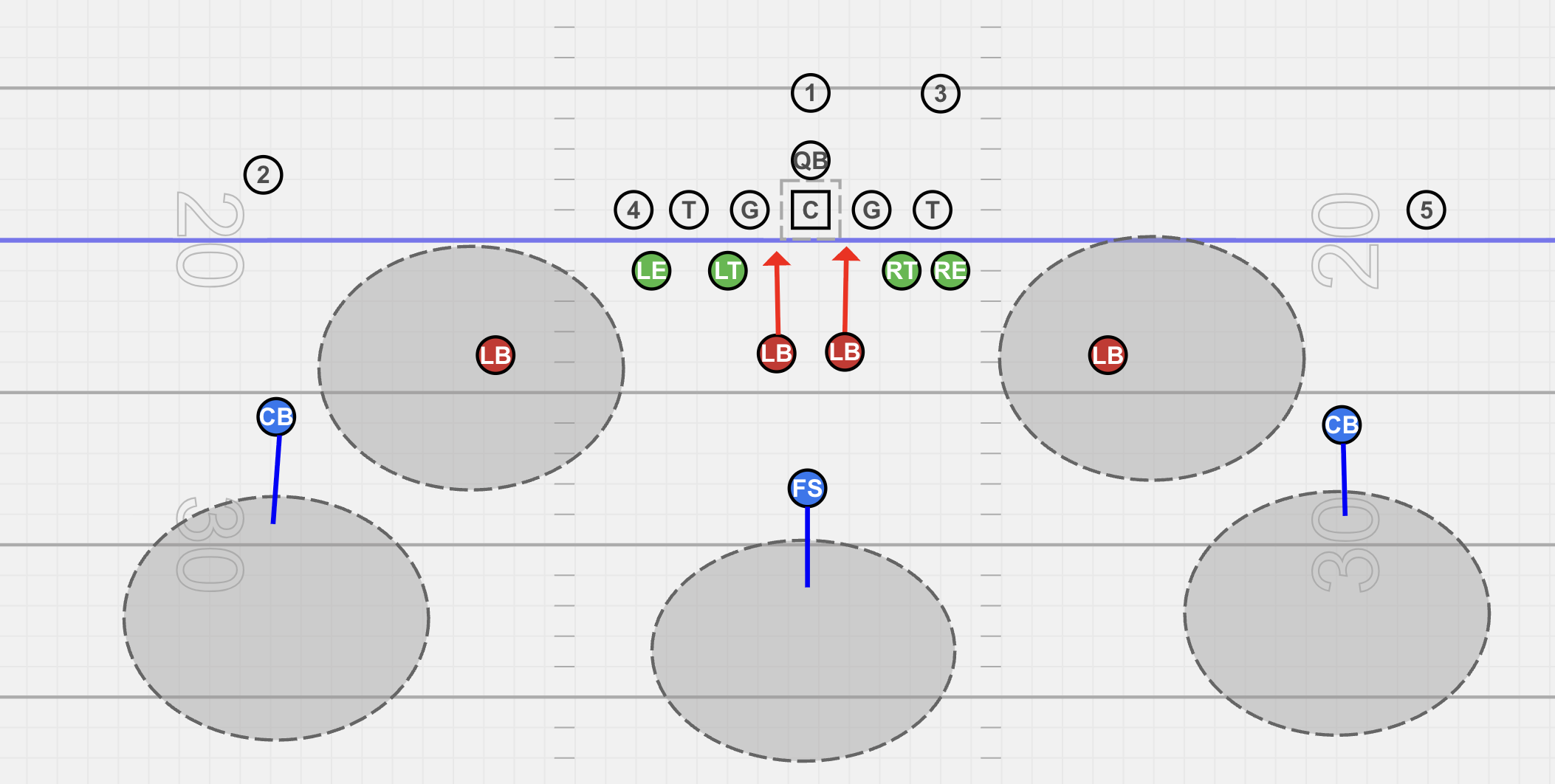
Remember, all we did with our outside alignment was move the two interior defensive linemen into B gaps. So the only two open gaps are the A gaps. These are the gaps the linebackers are going to blitz. The same goes if you aligned the defensive line to the inside.
It’s important to understand that whenever you blitz, you’re hoping that the blitz can make up for your inefficiencies. If you look at the middle of the field, you will be weak because you are blitzing both interior players.
Communication
Last is the communication piece. How are you going to get the play into your defense? If you’re able to be on the field with your players, then you, as the coach, can just call it. Nice and easy!
However, if you have to call plays from the sideline, you’ll need either a hand signaling system, to yell out to the players, or just wrist cards.
The easiest way is to hand signal it, so the players can all look to the sideline to see you. If you use verbal, that’s fine as well, just know the other team might be able to hear you.
Wrist cards aren’t a bad idea; they just require more manual labor to actually buy the wrist cards, print the sheets, laminate them, and then put them on every kid’s wristband.
My recommendation: create hand signals the kids can remember, or that one player (a reliable one) can look over and get from you. He then can tell the rest of the defense what’s going on.
What’s Next?
Congratulations! You just installed a defense. The next step is to make sure that your players know how to line up against any formation and that they know their run fit.
Practice running to the football and being aggressive every play, and your defense will come out on top!