
Organizing meaningful tackling drills is one of the most important things a coach can do. Coaches worldwide are teaching different styles of football tackling, but what is the most efficient and effective?
Free Play Calling Guide
Know the exact play to call in every situation
- Pick the front you see. Get the plays that beat it.
- Pick the play they run. Get the stunt that stops it.
- Tap-to-answer tool for the sideline, plus the PDF for your binder.
In this article, we spoke to HHH Tackling Academy’s Spencer Smith, who walked us through his tackling progression and how he teaches his athletes.
Tackling In Football
The main difference between football and rugby is the spacing between players when they are close to making contact. However, the closing distance and contact points are no different between football and rugby players.
Both contact styles require a strong foundation of leg drive, shoulder contact, wrap from the arms, and the head to be ultimately out of the tackle.
It’s important to do drills like the ones we will show you. Don’t get stuck in the traditional Oklahoma drill routine, where players are susceptible to injury. The videos below are the ones that youth football coaches should be teaching.
The Seattle Seahawks introduced their Hawk Tackle System, a similar rugby-style tackle that has gone viral.
Coach Spencer Smith has adopted similar rugby-style tackling practices with his football spin.
Coach Smith is the co-founder of HHH Tackling Academy. This academy helps players improve their tackling technique, making the game safer for both tacklers and runners.
In his three-year career as the tackling coordinator, he has taken his team from 25 missed tackles a game down to 6. This drastic drop in missed tackles is mainly due to his rugby-style teachings at HHH Tackling Academy.
Coach Smith has broken down his three components of tackling. He has worked with youth football players and NFL players. The shoulder tackling approach is a safe way to introduce straight-line tackling techniques.
How To Teach Tackling
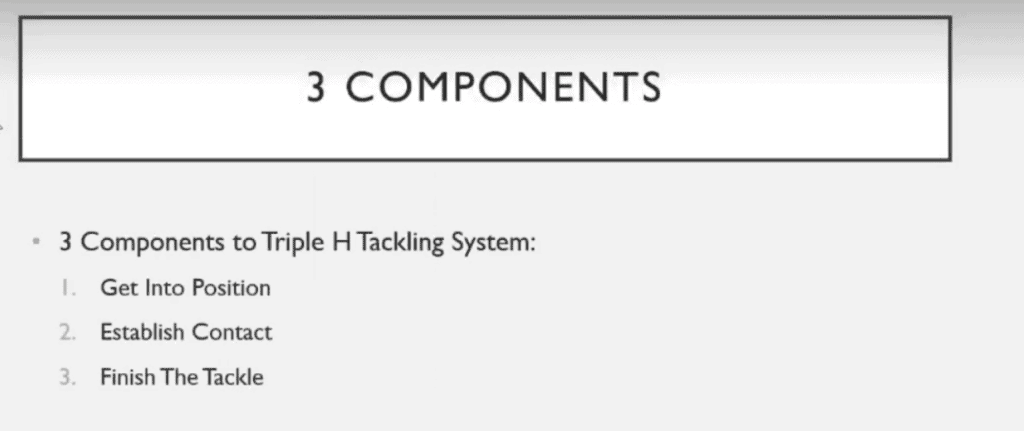
We’re going to cover the three components of tackling. This framework will help your players get into a better position to make a tackle.
Missed tackles are often caused by poor angles and positioning.
Getting Into Position To Tackle
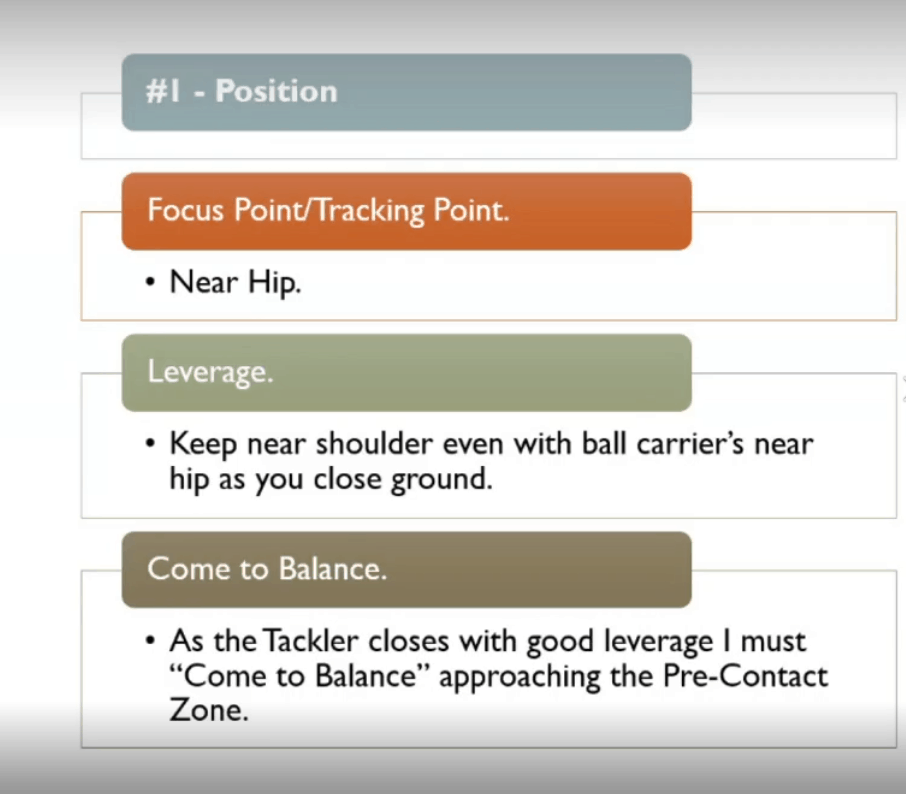
Defensive players must be in the proper position to tackle a runner effectively. Coach Smith references the appropriate focus point, and the tracking point is the near hip of the running back.
The hip is the center of the ball carrier’s body. If the offensive player wants to move in any direction, they must adjust their hip angle and drive toward that direction.
Focusing on the defender’s hip will also help with leverage. Offensive players will often cut back on defensive players if they have poor leverage.
To maintain proper leverage on the ball carrier, keep your near shoulder even with the runner’s near hip as you close the ground.
Missed tackles are often a result of poor leverage and balance. Coming to balance means balancing yourself to move in either direction while maintaining enough leverage and power to deliver a proper tackle.
Establish Contact
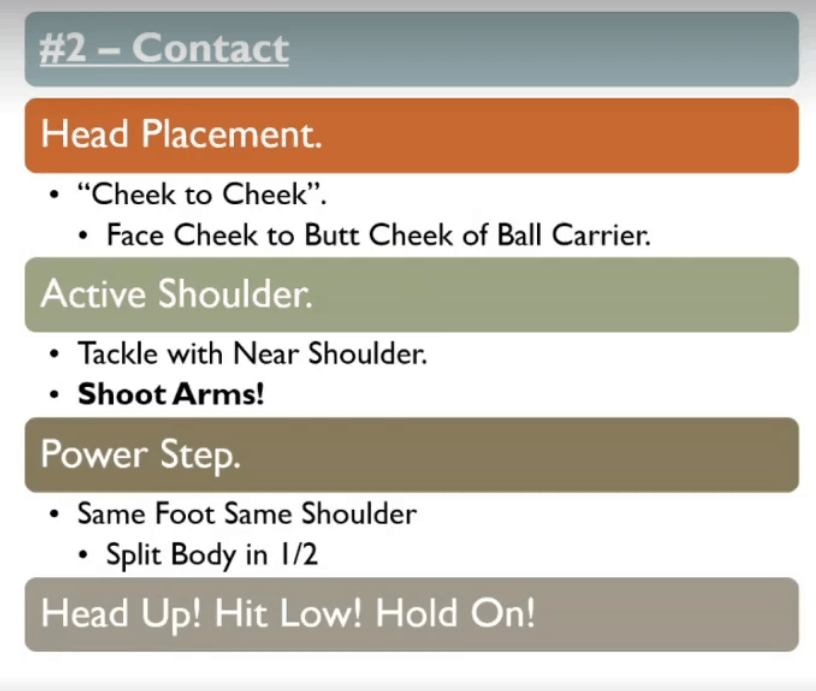
The next phase after the player has gotten into position is to establish contact with the ball carrier.
Starting with the force from the ground, Coach Smith teaches a power step: the same foot and the same shoulder. Once the tackler has established his lower-body positioning, attack 1/2, a man to make sufficient contact with the runner’s leg.
Once the tackler is in position, Coach Smith wants an active shoulder. Active shoulders mean the near shoulder should contact the ball carrier while the arms are being shot around the runner.
The arms should squeeze tightly around the ball carrier’s legs to use proper technique.
Finally, and most importantly, the head placement. Different from traditional tackling methods. Contact with the ball carrier should include no head within the tackle.
The head is placed on the side of the ball carrier, unlike the “head across” technique frequently taught. According to Coach Smith, taking the head out of the tackle is more effective and prohibits cutbacks.
Coach Smith uses the “cheek to cheek” coaching cue, meaning the tackler should put his cheek on the side of the runner’s lower cheek. This coaching cue forces the tackler to get low enough to strike the legs and make an impactful tackle.
Finishing The Tackle
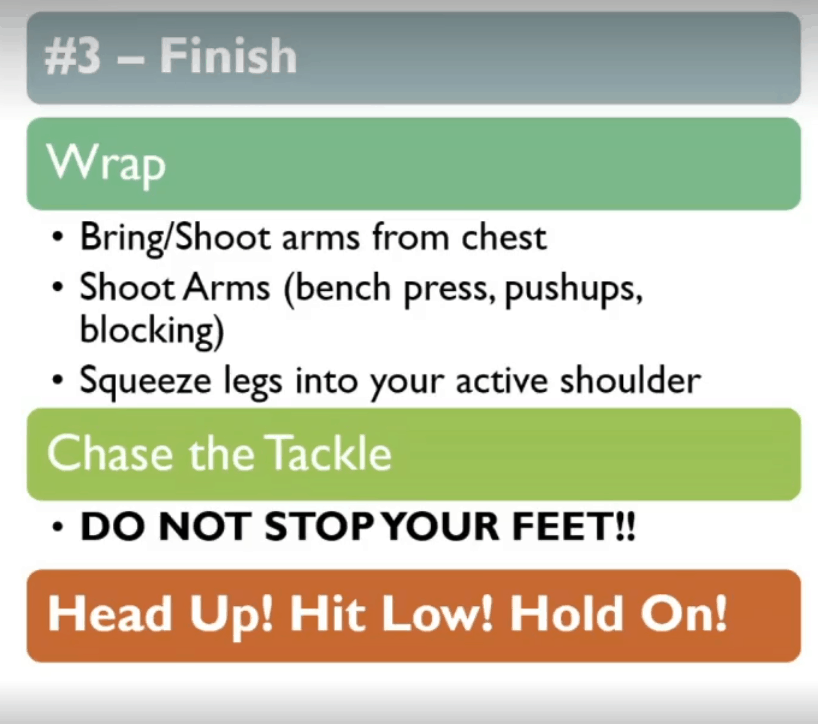
Last is the finishing part of the tackle. Once contact has been established, the arms should wrap the person carrying the ball. Coach Smith teaches to shoot the arms from the chest. This will bring the force into the tackle, rather than rounding the arms to wrap. This motion is comparable to football players’ off-season lifts, such as bench presses and pushups.
Squeezing the legs into your active shoulder will bring the ball carrier to the ground and immobilize him.
The coach makes a note of not stopping the feet through contact. Players must continue to chase the tackle once contact is made. When the feet stop, players will often widen their base and lose contact.
Coach Smith wants players to run their feet through contact to put ball carriers on the ground.
Football Tackling Drills
Coach Spencer Smith shares the most impactful drills that he does daily. These video drills are great for young players such as 7, 8, 9, and 10-year-olds and high school, college, and NFL players.
All of these drills can be done with or without pads. Coach Smith recommends that players get a feel for these drills without pads; they can transfer their technique to padded practices.
This is a great way to practice fundamentals and teach players how to absorb heavy contact from running backs.
Triangle Tackling Drill
The Triangle drill requires three players to start on their knees. Players will begin on either side. Once they make a tackle, they will reposition themselves back to the starting point.
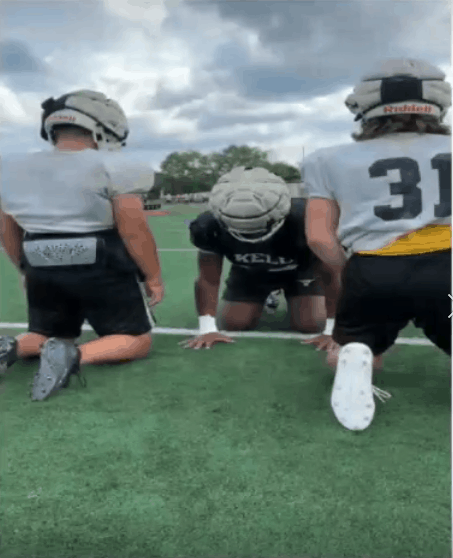
From here, the defensive player will tackle the other ball carrier. Starting from the knees is a great way to teach players to tackle properly and establish effective contact with the ball carrier.
The tackler will go back and forth for 4 reps, then rotate among players.
Mel Tackling Drill
The “Mel” tackling drill is an angle tackling drill that focuses on players getting into position and using the 3-step progression to finish the tackle.
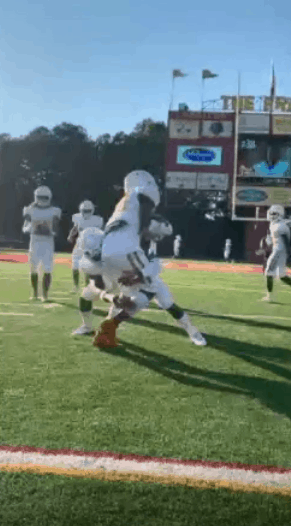
Coach Smith uses this drill in practice and on game day. This drill requires players to come downhill at an angle, emphasizing getting into position and finishing the tackle.
This drill is great for game situations and for developing the skills necessary for linebackers to tackle on the run.
Get Your Free Practice Template
Choose your high school or youth practice template below to start running more organized practices.
Warrior Tackling Drill
Coach Smith uses the warrior drill for footwork and finish. Players standing on the blue cone will move at a 45-degree angle to their right or left.
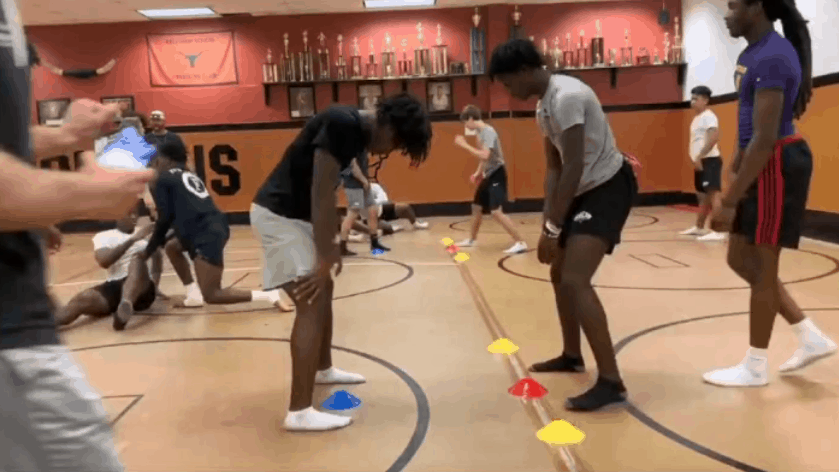
The tacklers will focus on getting their feet into position, wrapping their arms, and finishing through the tackle. The warrior drill is an excellent progression into fitting up a ball carrier and teaching tackling at full speed.
Lion’s Den Tackling Drill
This multi-progression drill allows both players to get significant reps over time. Coach Smith was able to reduce his missed tackles per game, in large part due to these drills.
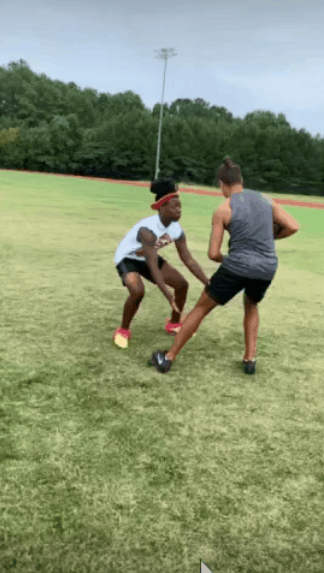
The emphasis of this drill is to get into position, tracking, and leverage. This drill will help prevent cutbacks and help defensive players take the proper angles to the ball carrier.
One major point of emphasis in The Lion’s Den is to finish with the palms on the thighs.
This allows the tackler to maintain proper body position to strike the thighs and legs as the tackler progresses through the tackle.
Bear Trap Tackling Drill
The bear trap drill is a two-part drill that allows two players to get equal, quality reps. First, the ball carrier and tackler will start back-to-back. Each player will go around the cone placed in front of them, and the tackler will make an open-field tackle.
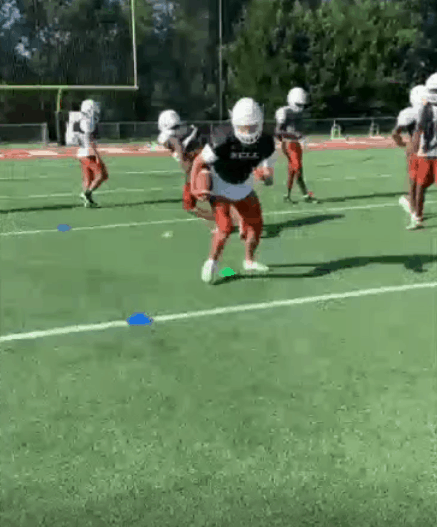
From here, the ball carrier and runner will switch positions. The next set of cones will be an open-field tackling drill. This requires tacklers to bring the ball carrier to the ground in a game-like situation.
Both the runner and tackler should be moving at full speed, emphasizing that the drill is to be as close to simulating a game as possible.
Quad Tackling Drill
The quad is a gauntlet-style tackling drill that forces the tackler to come to balance for each ball carrier he encounters. As the name states, four players will be aligned on four cones.
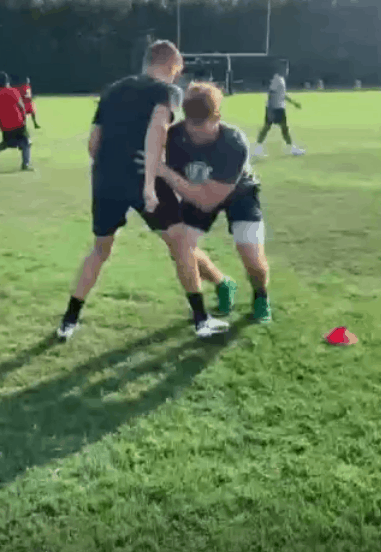
The tackler will run to each of the four ball carriers and emphasize getting into position. This non-contact drill requires players to get their feet in the right position, pad level at the right angle, and head near the cheek.
Coach Smith focuses on one main coaching point: the players need to have their feet, hips, hands, and shoulders properly aligned upon contact. Players with arms extended often lunge and miss the ball carrier. This drill will help clean up and expose players who are not in the correct position.
Free Play Calling Guide
Know the exact play to call in every situation
- Pick the front you see. Get the plays that beat it.
- Pick the play they run. Get the stunt that stops it.
- Tap-to-answer tool for the sideline, plus the PDF for your binder.