
As the passing game advances, defenses need to match personnel and scheme. Defenses have used personnel groupings like nickel, dime, and quarter defenses to match the offense’s speed. What exactly are nickel, dime, and quarter defenses?
Free Play Calling Guide
Know the exact play to call in every situation
- Pick the front you see. Get the plays that beat it.
- Pick the play they run. Get the stunt that stops it.
- Tap-to-answer tool for the sideline, plus the PDF for your binder.
The nickel defense has five defensive backs on the field at once. The term nickel refers to American currency, which is equal to 5 cents. Nickel defenses are used on third downs when the defense expects the offense to throw the football.
Dime & quarter defenses have 6 and 7 defensive backs on the field to protect against deep passes or Hail Mary throws.
In this article, we will break down what nickel, dime, and quarter defenses are in football.
Nickel, Dime, And Quarters Defenses
Even though you might have thought this blog would be about money, it is all about defensive personnel. We’re going to learn how currency terms affect football personnel.
Nickel, dime, and quarter refer to personnel groupings on the field.
These defenses are when the defense brings in extra defensive backs and sends a linebacker or linemen to the bench.
Let’s explore the Nickel package first.
Nickel Defense In Football
The Nickel defense can be shown in two main variations: the 4-2-5 and the 3-3-5. Let’s look at both.
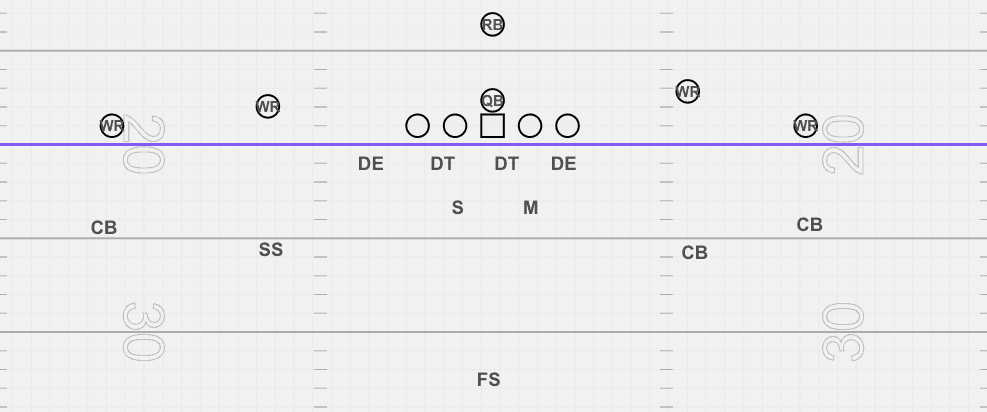
First, we have the 4-2-5. Those numbers suggest 4 defensive linemen, 2 linebackers, and 5 defensive backs. This front exchanges a linebacker for a “nickel” corner so that one other coverage specialist is on the field. The nickel corner can also be a third safety if the coach chooses.
This slot cornerback (or nickelback as it’s often called) is a staple in every defense at the NFL level.
The nickel defense has become very popular among defenses all across the country at every level due to the sophistication of the spread offense. Teams are less likely to play power football and more likely to expose the open spots in the defense.
When offenses started to bring in a third wide receiver, defenses had to match the speed. The nickel defense is well-balanced to help do so.
Because offenses are spreading teams out more, it forces defenses to add extra speed players onto the field to match the speed of the offense. Thus, nickel, dime, and quarter packages were born to help match speed against speed.
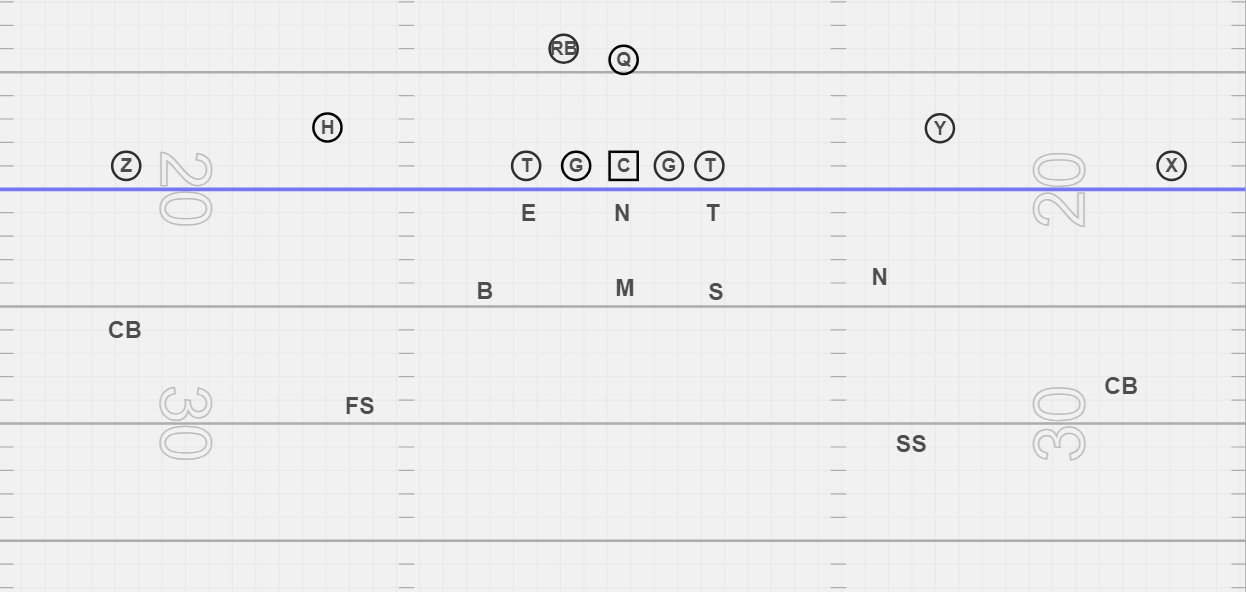
The other popular variation is a 3-3-5 front. Instead of exchanging a linebacker for a slot corner, this front exchanges a defensive lineman for a corner. Teams can also use three linebackers (if the third linebacker can run with slot receivers)
Regardless of the 3-3-5 or the 4-2-5 variation, the benefit is that there is an extra defensive back on the field. It is up to the coach to utilize the front 6 of the defense, as both have pros and cons.
Teams will play multiple coverages, such as Cover 1, Cover 2, and Cover 4, in dime defenses.
Dime Defense
When we have a Dime defense, we add yet another defensive back. We now have two slot cornerbacks on the field, which better suits a defense in defending a 4-WR set from an offense.
This comes at the expense of greater vulnerability to the run, but this personnel group makes sense plenty of times.
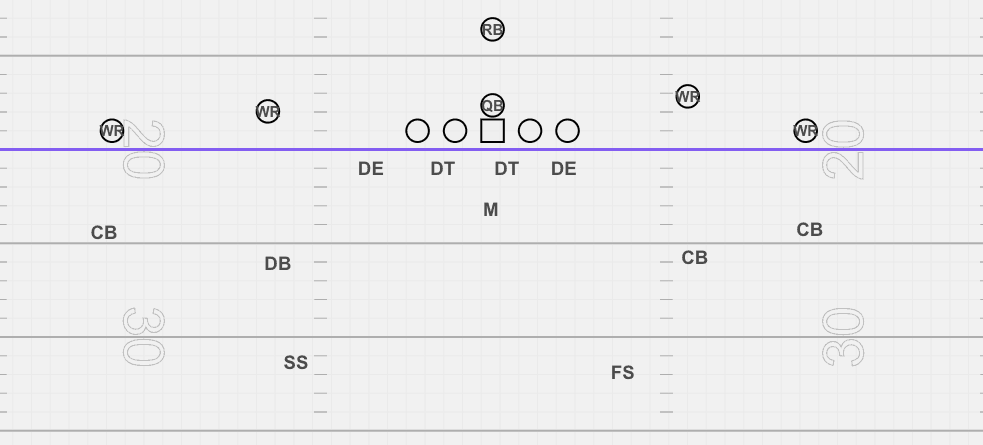
The picture shows a 4-1-6 grouping (4 defensive linemen – 1 linebacker – 6 defensive backs). It is worth noting that this could also be run as a 3-2-6, but it is not as common.
This defensive style is commonly run on passing downs, where the defense can cover more of their receivers with their skill positions. It does leave the box vulnerable, as the offense can run the football with little resistance. Teams that are really good at dominating the line of scrimmage can run the 4-1 box and be comfortable. There won’t be any run-throughs.
Quarter Defense
The most extreme of the pass defensive packages is the Quarter. Our picture below shows 3 safeties and 4 corners, but it could be 5 corners and 2 safeties.
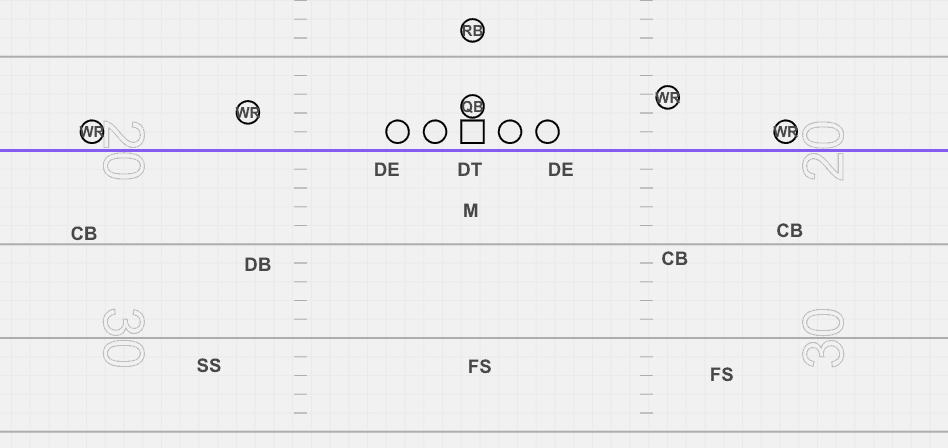
Defenses rarely use this look, and it only comes up when obvious, deep passes are coming. Last, this look almost always comes with 3 defensive linemen and 1 linebacker.
Similar to what we talked about with the dime defense, this formation is used for passing situations, where there’s almost a guarantee that the offense will try to push the ball downfield.
The quarter defense is great for protecting against deep passes and can prevent defense for long pass plays.
Why Defenses Run The Nickel, Dime & Quarter Defenses
It’s important to be able to match the offense’s personnel as well as play type.
In an example of matching personnel, teams need to play with the other team’s speed that they have on the field. Oftentimes, if the team has 4 wide receivers on the field, it makes sense to have one more defensive back to match the speed.
Especially if the offense has the intent to pass due to down and distance situations, this is why play type is essential.
For example, if the team is in a 3rd and long (7 or more yards) situation, there’s a high percentage that they will throw the football.
Also, as teams migrate to spread offenses with Air Raid philosophies, teams will throw the ball as often as possible. Teams that don’t necessarily have to worry about the run game can bring in dime and quarter packages.
These teams can now match up speed-wise to play a combination of zone and man coverage and still be able to play the run if necessary.
There is also another variation to use what’s called a “big nickel”, meaning the team will sub in a strong safety who can run with fast tight ends or slower wide receivers.
Get Your Free Practice Template
Choose your high school or youth practice template below to start running more organized practices.