
Zone blitzes are a unique blitz style created to confuse the opposing quarterback. Teams are using the zone blitz more often now that spread offenses are common. What is a zone blitz?
Free Play Calling Guide
Know the exact play to call in every situation
- Pick the front you see. Get the plays that beat it.
- Pick the play they run. Get the stunt that stops it.
- Tap-to-answer tool for the sideline, plus the PDF for your binder.
A zone blitz occurs when the defense blitzes a linebacker and then drops a defensive lineman into pass coverage. These blitzes are run to confuse quarterbacks and offensive linemen’s blocking schemes, allowing defenses to protect against short passes.
This article will show you what a zone blitz is and why teams run the popular pressure concept.
Blitz In Football
A normal blitz is when the defense rushes five or more players toward the line of scrimmage.
Defenses will blitz to confuse the offense and bring pressure to the quarterback. Some defensive coordinators will blitz more than others; it all depends on their philosophy.
Zone Blitz
The zone blitz is when the defense uses a zone coverage scheme while blitzing a defender. While this may seem straightforward, this play call has not existed throughout football history.
The zone blitz was invented in 1971 by Miami Dolphins defensive coach Bill Arnsparger.
However, it was not until the early 1990s that defensive coach Dick LeBeau popularized the scheme in professional football while coaching for the Cincinnati Bengals.
The zone blitz is broken into two parts:
- Zone Coverage
- Zone Pressure
Before the zone blitz was introduced, teams played two defensive styles: zone or man coverage.
Zone defenses typically required a 3- or 4-player rush and had 8 or 7 defenders covering different areas of the field.
Man coverage is a bit more stressful for defensive backs, as they must follow an athletic receiver across the field. Coaches tried to relieve the stress by adding 5 or 6-man pressures to make the quarterback throw the ball as quickly as possible.
Zone Coverage
The defense will often show a blitz, then will have a defensive lineman or a defensive end drop into coverage.
This will do two things to the defense.
First, it confuses the offensive lineman. Most offenses have “Hot reads” built into their plays. When a quarterback reads blitz and sees more players blitzing than his offensive line can handle, he will throw to his hot read (often a slant or a seam route).
Second, it puts pressure on the quarterback.
When the quarterback goes to throw the hot read, a defensive lineman or defensive end will drop into the quarterback’s window, leading to a bad throw.
Zone Pressure
We’ve discussed a lineman dropping off into zone coverage now. Let’s look at the other half of the play, the pressure.
The zone blitz allows linebackers, corners, and safeties to get into the blitz game.
As long as the defensive linemen and defensive ends can bail out to the throwing windows of different receivers, the combinations for zone blitz are endless.
How The Zone Blitz Works
It is essential to know that you can blitz any defender on the field and use whatever zone coverage to pair up with the blitz, which can be used with any personnel group. This means dozens of different zone blitzes can easily be run.
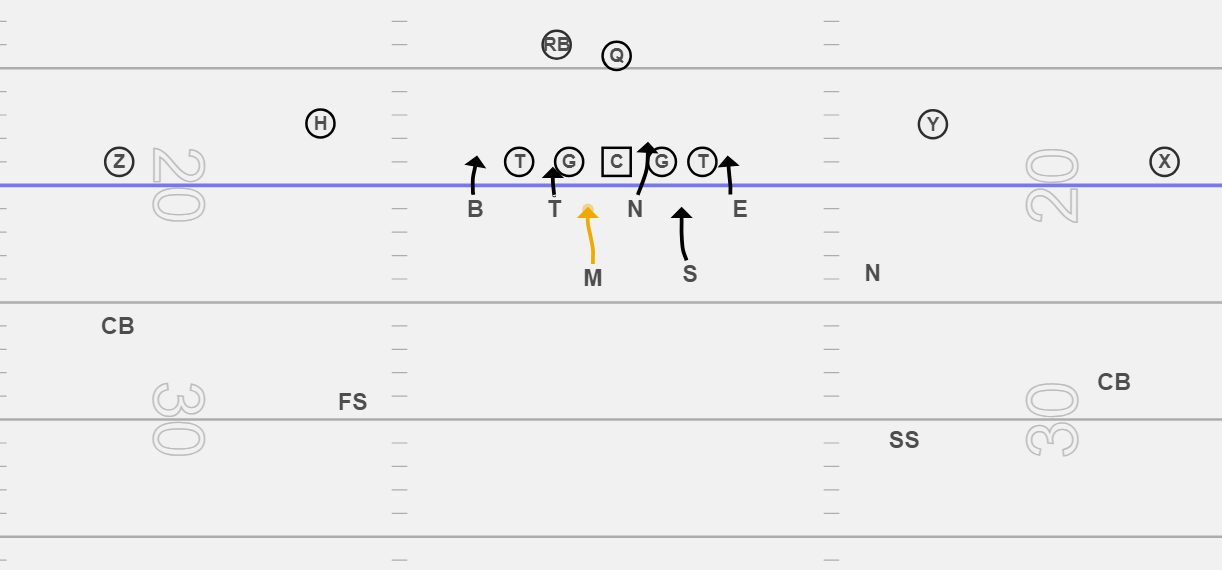
Below is a diagram of a 4-3 defensive front rushing five defenders (including blitzing two linebackers) and dropping six defenders into coverage:

An important component of the zone blitz is that defensive linemen can drop into coverage. Above, we see a defensive end dropping into a “Bronco” coverage, confusing the offense.
This is also known as a fire zone blitz. When bringing pressure and dropping defensive linemen, underneath defenders can steal any crossing routes in the middle of the field.
Why Run a Zone Blitz?
A zone blitz is meant to do one thing: confuse an offense. The first element of surprise is not showing the blitz until just before the ball is snapped. Using zone coverage will likely cause further confusion since a blitz call has a man coverage scheme.
Confusion from a quarterback often leads to turnovers, bad throws, or sacks. High-pressure teams that utilize the zone blitz often live in high-risk, high-reward situations.
The zone blitz scheme has proven to be particularly effective against screen passes. A prime example of a Dick LeBeau team executing against a screen pass comes from Super Bowl XLIII (Steelers vs. Cardinals).
Disadvantages Of The Zone Blitz
There are two significant disadvantages that we need to point out.
The first is the liability of a defensive lineman in coverage. A defensive lineman is not used to playing coverage and will inherently not be as effective as a Linebacker or Defensive Back that does it more frequently.
Defensive linemen (typically in a 3-4 scheme) are often bigger defenders used to either 2-gap or control the line of scrimmage. Having a bigger player drop into pass coverage (who may not be that coordinated or have the proper footwork to drop) could be more of a risk than a reward.
Secondly, zone blitz plays are typically poor against running plays. When a defensive lineman drops into coverage, it leaves a vacancy in the line. In most cases, the offensive line could be exploited while blocking.
Against power schemes, zone blitzing a safety or a corner off the edge, and having a bigger player drop off the line of scrimmage can hurt the run fits. Just as defensive linemen aren’t used to dropping into coverage, safeties and corners aren’t used to playing inside the box.
Teams also have the ability to run a zone blitz but play man coverage on one half of the field. This is known as split field coverage and allows defenses to do more diverse and exotic play calls.
When Is The Best Time To Call A Zone Blitz?
Zone blitzes are most effective in down-and-distance situations ( 2nd/3rd and 7+). The key to these situations is winning first down and forcing the offensive coordinator to call a pass play.
Field position always plays a major factor in calling a zone blitz. If an offense is backed up in their zone, having a zone blitz called adds even more pressure not to take a sack, throw an interception, and ultimately be perfect.
Conversely, zone blitzes can be run in your zone, as the field to cover is shorter. This allows your defensive lineman & defensive ends to cover a shorter field. It also closes the windows for the quarterback.
Five-man pressures are the safest because they allow you to drop out 6 pass defenders. Although confusing offensive lines by bringing four-man pressures and dropping 7 could also work.
Get Your Free Practice Template
Choose your high school or youth practice template below to start running more organized practices.
Learn more about coverages in football below.
Defensive Coverages In Football – Complete Guide
What Are The Nickel Dime & Quarter Packages In Football?
What Is Cover 5 In Football? 2-Man Explained
Cover 4 In Football: Coverage Guide
What Is Cover 0? Learn The Basics Of Man Coverage
Learn The Basics Of Cover 1 In Football
Split Field Coverage In Football