
Off-man is one of the safest coverages to play against deep passes, but it can also be very effective against short routes, too, when played properly.
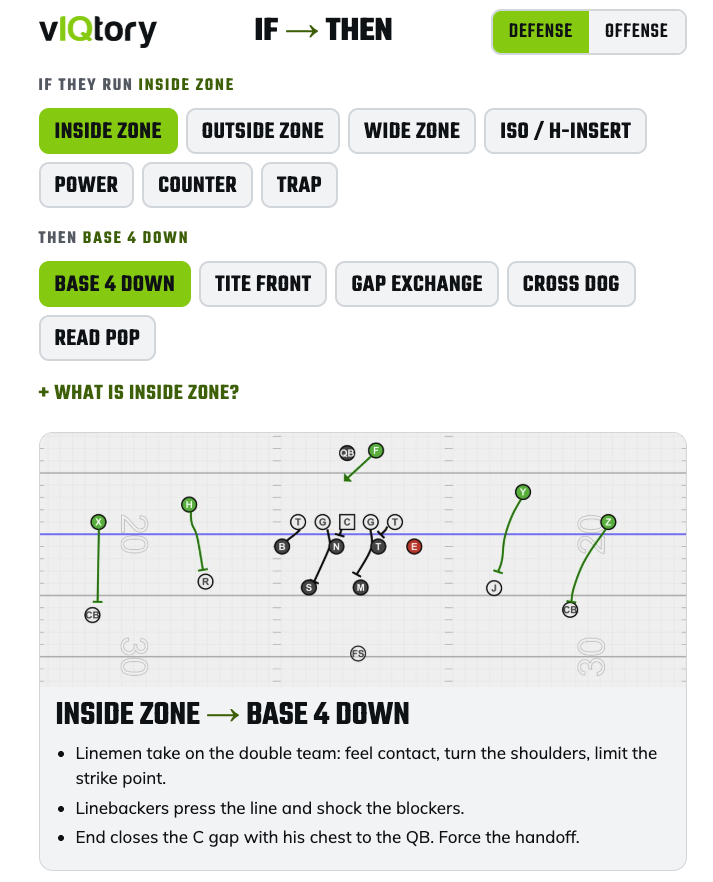
Free Play Calling Guide
Know the exact play to call in every situation
- Pick the front you see. Get the plays that beat it.
- Pick the play they run. Get the stunt that stops it.
- Tap-to-answer tool for the sideline, plus the PDF for your binder.
In this article, we’ll show you the different types of off-man coverage and how you can coach them into your coverages.
This is one piece of the secondary install. The full progression is in the guide on how to coach defensive backs.
Off-Man Coverage
The purpose of off-man is to cap any deep throws. Often used in conjunction with blitzes, off-man is an effective way to force the quarterback to throw short, allowing your players to rally down and tackle the ball carrier.
Before we talk about technique, it’s important to understand common wide receiver breakpoints. We call this the “3, 5, 7 rule”.
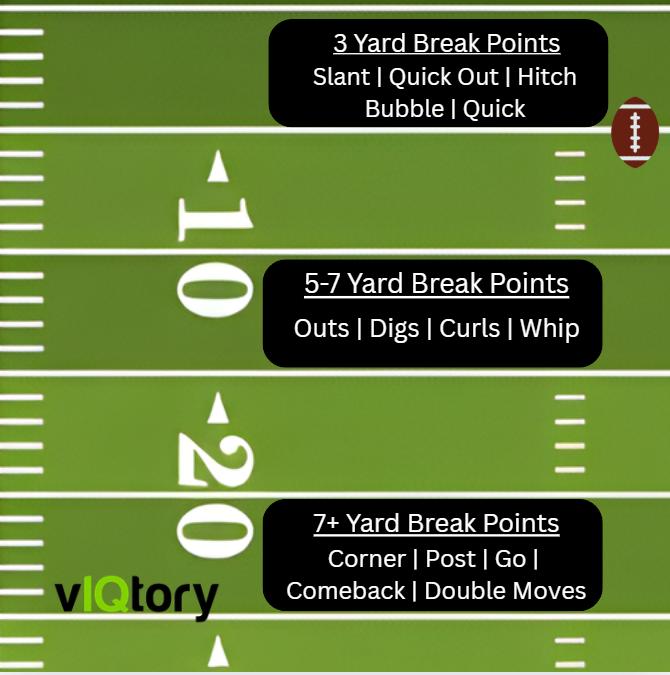
Most wide receiver breaks happen at 3,5 and 7 yards. As a defensive back playing off-man coverage, it’s important to check these yardage markers off our list as we’re tempo-backpedaling out.
At 3 yards, we can drive on it now, as the quarterback is trying to get rid of the ball quickly. At 5 yards, the defensive back will take 2-3 steps before breaking.
Once the wide receiver hits 7 yards, we know he is breaking upfield, and we need to open our hips and run.
Off-Man Technique
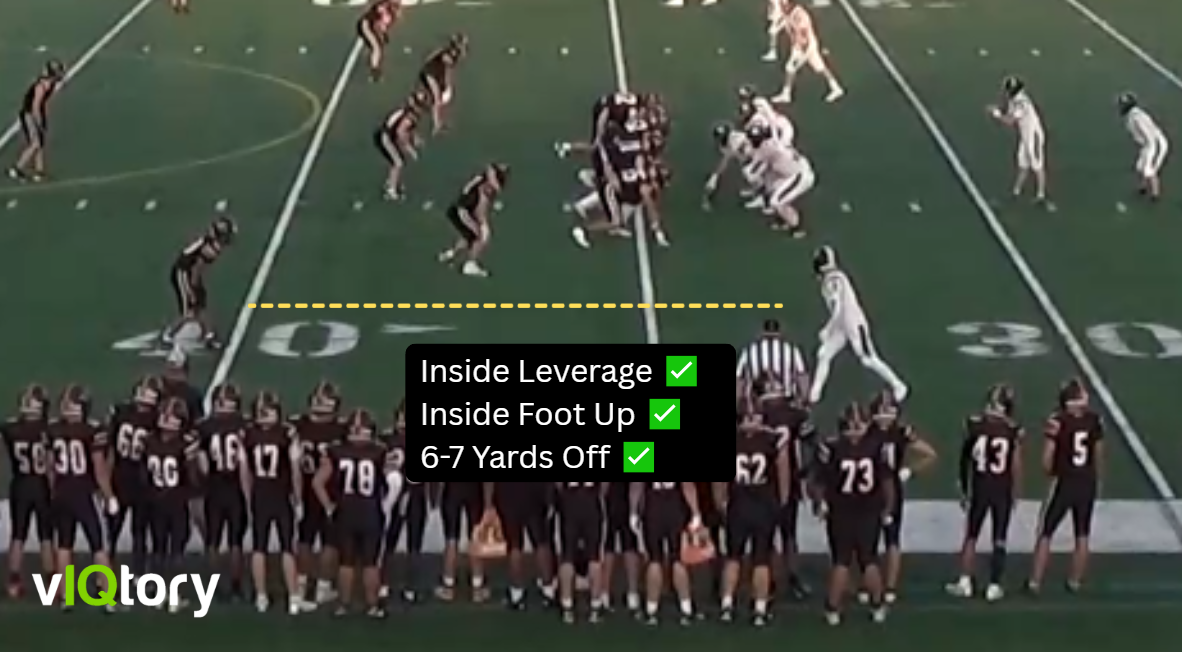
In a zone defensive back stance, we wanted our inside foot back. However, in a man stance, we’ll want our outside foot back instead. This allows us to have full intentions on the wide receiver.
When playing off-man, it’s good to be at least 6-7 yards off the line of scrimmage, with 1 yard to the inside.
Why 6-7 yards off the line of scrimmage? If you’re below 5 yards, it’s easier to press the receiver. If not, you’re putting yourself in an awkward position where you can’t back pedal out and see where the receiver’s breaks will happen. There is a technique called a catch-press that is best played at 5 yards. But if you’re going to backpedal, stay at the 6-7-yard landmark.
Why 1 yard inside? In man coverage, you always want to have leverage either inside or outside. Inside leverage is most common because it’s closest to the QB. It’s the shorter and easier throw for the quarterback. This allows the defensive back to break on any slants or in-breaking routes and have a play on the football. If the wide receiver takes away your leverage, they can make a move inside or outside.
Catch Press Technique

In the catch-press technique, the defender should play with their feet horizontally aligned. Think of it as a basketball player who is trying to cut off the receiver and “take a charge”. However, when the receiver gets close, you want to teach your players to collide with their hands and ride the receiver down the field.
The alignment for the catch-press technique is typically at 5 yards and 1 yard to the inside. This is different from the original bump and run or “press” technique.
Why 5 Yards? You can drive any quick throws at 3 yards, match any throws at 5 yards, and collide and ride any throws over 7 yards.
Why 1 Yard Inside? Similar to off-man, you want to own leverage against the offense so they can’t win on an inside slant (easiest throw for the QB) and split your defense for a touchdown.
This technique is best for safeties or linebackers who are physical players and can run with these tight ends or slot receivers down the field. This also allows them to contest for balls being thrown, putting them in-phase immediately.
These two techniques will allow your defensive backs to quickly nail down on any short routes (best used in conjunction with scooch footwork) and put themselves in position to play deep throws.
Free Play Calling Guide
Know the exact play to call in every situation
- Pick the front you see. Get the plays that beat it.
- Pick the play they run. Get the stunt that stops it.
- Tap-to-answer tool for the sideline, plus the PDF for your binder.