
The difference between an interception and a completion is mere inches. For the defensive back to transition in and out of their breaks, they must begin the play in proper posture.
Free Play Calling Guide
Know the exact play to call in every situation
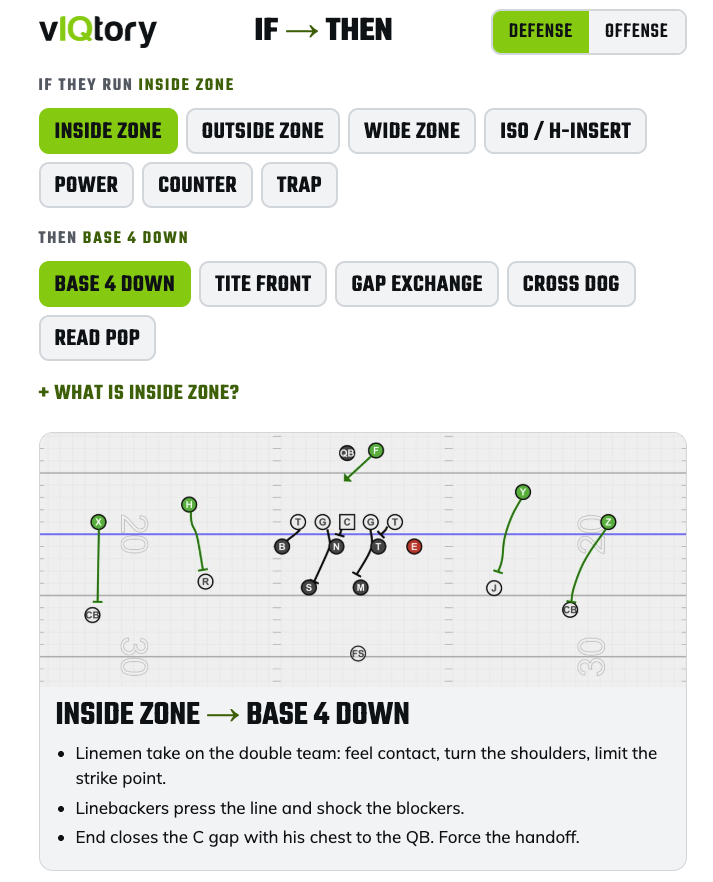
- Pick the front you see. Get the plays that beat it.
- Pick the play they run. Get the stunt that stops it.
- Tap-to-answer tool for the sideline, plus the PDF for your binder.
In this article, we’ll show you how to get into a proper posture so that your defensive backs can compete for more interceptions.
This is one piece of the secondary install. The full progression is in the guide on how to coach defensive backs.
Defensive Back Stance

Feet
First, the defensive back should stagger their stance with their inside foot back. The foot that is back should be about one foot behind the front foot, aligned at a 45-degree angle.
The reason you want your feet staggered is that it allows the player’s head to have a clear view of their key and the quarterback. If the inside foot is up, it will restrict their neck rotation (with a helmet on) to the backfield.
Chest
The chest is the most important part of the stance. The player’s chest should be aligned with their knees, and their chin should be slightly above their toes. This is important because, as the player begins to backpedal, you want to ensure that their top weight remains forward.
If their chest gets behind their hips, it’s harder for the defensive back to transition forward. This is because they must transfer all their weight off their back foot to drive forward.
Arms
In an off-alignment (typically a zone stance), it’s best to have the arms relaxed. We like to teach them at a 45-degree angle, ready to run. The key is to have them in control, as you may need to transition at all angles.
If you pump your arms like you are running back and forth, the body needs to recalibrate the momentum that is swinging it back and forth. For this reason, it’s better to have the legs do the backpedaling, then let the arms transition when it’s time to break on the ball or play in phase.

Defensive Back Mentality
Players should backpedal for no more than 5 yards (learn how to scooch here). The best way to think of backpedaling is just a transition state before they actually break on receivers. Too often, defensive backs will be so quick to backpedal out that they give up valuable space.
If you’ve ever had hitches completed on you consistently, you know exactly what I’m talking about.
To prevent this, defensive backs should progress in this manner:
Read Steps – The first 3 steps are slow steps to gather information. They should be done with a slow tempo back pedal to read if it’s a run or a pass
Tempo Back Pedal – As the wide receiver begins to threaten the defensive back with speed, they should begin to pick up the pace of their slow back pedal.
Remember, you never want to reach full speed in your back pedal; it’s just a small vehicle to get in and out of your breaks.
This is the most common stance to use when you’re playing zone coverage. It gives your defensive backs a great foundation to teach off-man coverage and the scooch technique.
Free Play Calling Guide
Know the exact play to call in every situation
- Pick the front you see. Get the plays that beat it.
- Pick the play they run. Get the stunt that stops it.
- Tap-to-answer tool for the sideline, plus the PDF for your binder.