
Pitching the ball in any option play or shovel play, the quarterback needs to be precise in where he pitches the football. Too high or too low, it can be a fumble. Right on the numbers, and the running back won’t have to break stride.
Free Play Calling Guide
Know the exact play to call in every situation
- Pick the front you see. Get the plays that beat it.
- Pick the play they run. Get the stunt that stops it.
- Tap-to-answer tool for the sideline, plus the PDF for your binder.
In this article, we’re going to show you how to coach the option pitch to gain extra yards after the initial read option.
This is one piece of the quarterback install. The full progression is in the guide on how to coach quarterbacks.
Option Pitch
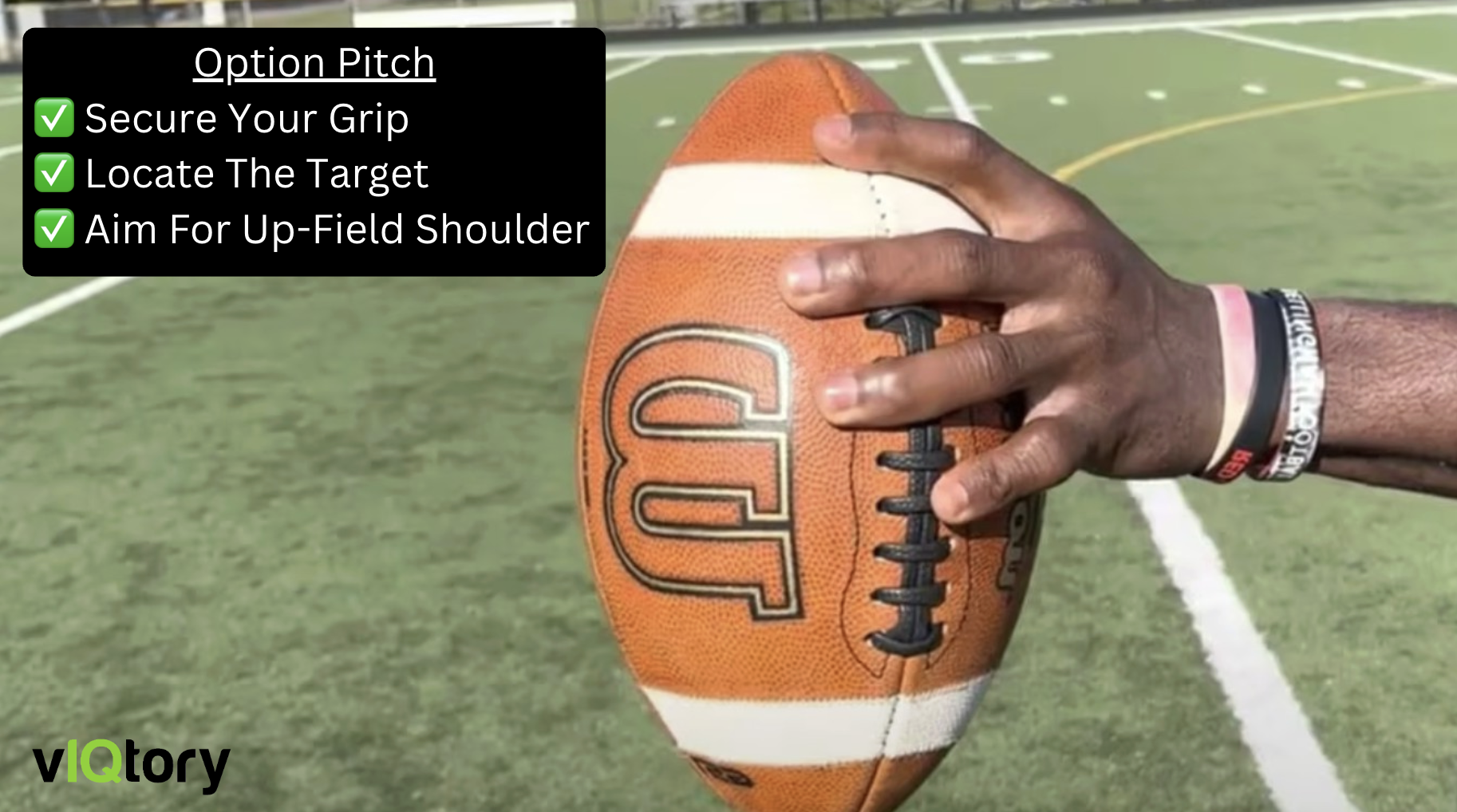
The option pitch is the third option in most triple-option plays. The quarterback needs to have his hands firmly gripped on the football, with his pitch hand ready to trigger at any moment. Below, we will break down the 3 components of the option pitch: Grip, Eyes & Finish.
Grip
First, the grip on the football should be as if the quarterback is ready to throw the football. This means they should have their hands as close to the laces as possible. The other hand should be on top of the football for security.
As the quarterback puts the ball in the belly of the running back, his hands should be as close to the laces as possible. The reason is that if the DE charges him and he needs to pull it and pitch it quickly, we want the pitch to be as accurate as possible.
Eyes
Next, once the quarterback pulls the football from the belly of the running back, the pitch has been activated.
It’s important to practice the pitch relation to the quarterback, as the distance should be the same on every pitch. If the running back is slow or too fast, the quarterback will adjust every single time.
We want the quarter to be able to quickly locate the path of the running back with his eyes, which should be relatively in the same spot as it was in practice.
The head should quickly turn toward the target, then the pitch should begin. If the pitch starts before the eyes, that’s where poor pitches and fumbles occur. Have to be able to see what you’re trying to hit.
Finish
Once the running back has been located, pitch the football to the upfield shoulder. The running back should catch the football without breaking stride. If the ball is behind them, it will slow them down. If it’s too far in front, there is a chance they will fumble it.
Once the ball leaves the quarterback’s hands, it’s important that he protects himself by falling toward the running back and away from the defensive end.
We want to minimize contact with our quarterbacks as much as possible. If they just stand there, they will get drilled by the defensive end. Falling away from the defensive end will minimize the impact.
Free Play Calling Guide
Know the exact play to call in every situation
- Pick the front you see. Get the plays that beat it.
- Pick the play they run. Get the stunt that stops it.
- Tap-to-answer tool for the sideline, plus the PDF for your binder.
To learn more quarterback techniques, continue reading here: