
A wide receiver in football is one of the most exciting positions. The opportunity for big plays is endless when you play wide receiver. But what is a wide receiver, and what do they do?
Free Play Calling Guide
Know the exact play to call in every situation
- Pick the front you see. Get the plays that beat it.
- Pick the play they run. Get the stunt that stops it.
- Tap-to-answer tool for the sideline, plus the PDF for your binder.
Wide receivers in football are responsible for catching passes from the quarterback. On run plays, they are responsible for blocking the cornerback.
This article will show you how to play wide receiver in football and things you can do to be a better wide receiver.
This is one piece of the wide receiver install. The full progression is in the guide on how to coach wide receivers.
Wide Receiver Position In Football
The wide receiver position plays a huge role in the success of your team.
The ability to move the ball through the air has become a staple in most high school, college, and professional offenses.
Wide receivers are the key to creating an effective passing attack.
The wide receiver and slot receiver positions are responsible for catching the ball from the quarterback. They run routes down the field that are diagrammed by their offensive coordinator.
It’s common that in the NFL, first-year wide receivers will rarely see the field in their rookie season. They have much to learn to be well-rounded receivers.
Wide Receiver Techniques
These basic techniques used by every wide receiver are the following:
- Stance & Start
- Releases
- Securing the ball in traffic
- Running in an open space
Stance & Start
The first thing a wide receiver must do is run off the line of scrimmage and separate himself from the player covering them.
Wide receivers need to have a plethora of moves at the line of scrimmage to beat corners who are pressing them.
When you have separation at the line of scrimmage, you can effectively use your speed to get behind the defense.
We recommend reading this article about stemming and stacking and different releases at the line of scrimmage.
Releases
Wide receiver releases are used to get the defensive back moving in one direction so that you can go in the other direction.
The wide receiver then breaks at a 45-degree angle (or vertical), making his move after his defender commits to his fake route.
This technique is used to get behind the second line of defense. It creates separation from your defender because he’s already committed to defending your fake route.
To use this technique effectively, you have to use the same footwork you would use if running a normal route, just without running.
Securing The Ball In Traffic
One of the most challenging things for wide receivers is to secure the ball while going up for a pass in traffic.
When several players are around you as the ball comes down, it can be challenging to secure the football.
You must be able to hold onto the football while simultaneously fending off defenders.
Wide receivers typically need strong hands and wrists to secure the ball.
Wide receivers have to catch the football and navigate through defenders downfield. This is essential in making plays over the middle executed on dig routes and slants.
Running In Open Space
A wide receiver must run with the ball after he catches it. A wide receiver can make a big play if he can outrun the defense after catching the football.
He must react quickly and shift direction while accelerating through the secondary.
To run effectively, you need balance and body control. You must have a good forward lean as you run upfield.
If you get tackled, drive your legs forward to gain extra speed, then finish by falling forward.
Wide Receiver Routes
There are many different routes that a wide receiver has to run to get open and catch the football. He needs to run all of these routes with precision and consistency to play the position effectively.
Here are the types of routes that a wide receiver has to run:
Go Route
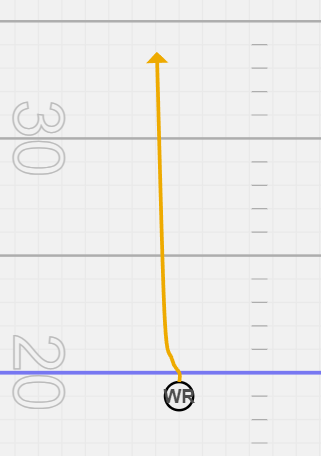
The go-route is a deep route usually reserved for wide receivers who have speed and quickness. It is used when a team wants to get behind the defense, typically on third down.
It’s one of the most common downfield pass plays made during a game because it’s effective at moving the chains.
Hitch Route
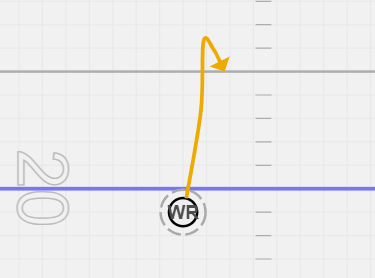
The hitch route is a short-distance route. It involves taking a few steps toward the line of scrimmage and then sticking your foot in the ground and stopping quickly.
This causes your defender to be out of position and then you break back outside with enough separation to catch a pass before you’re tackled by another defender.
Curl Route
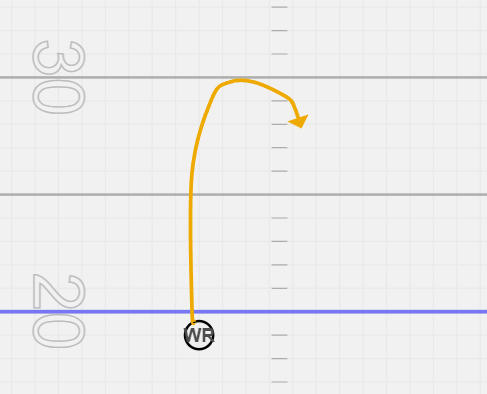
The curl route is used to get open by running downfield, turning around, and catching an intermediate pass.
This is usually executed from an outside position, where you can get away from your defender because he can’t run as fast as you can straight upfield, then break back to the quarterback.
Corner Route
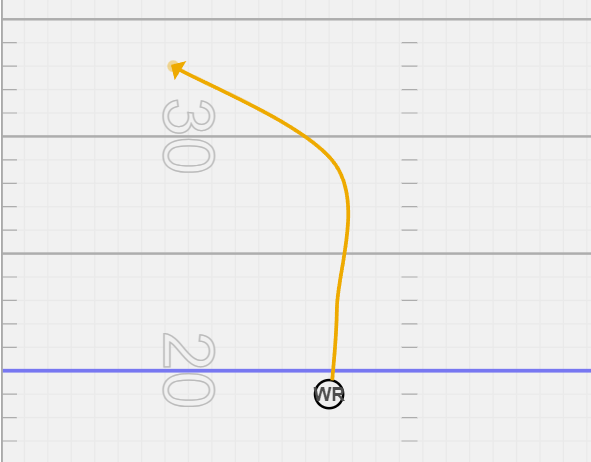
Also known as a “flag” route, this route requires the wide receiver to run as fast as they can up the field. Once they hit 7-10 yards, break at a 45-degree angle toward the sideline.
Flat Route
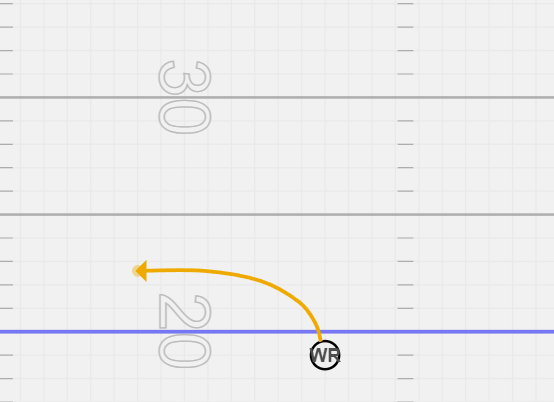
The flat route is a short route that involves the wide receiver running toward the sideline at 2-3 yards. This pass is typically quick and allows the wide receiver to gain 4-5 yards.
This route is commonly run by a slot receiver.
Out Route
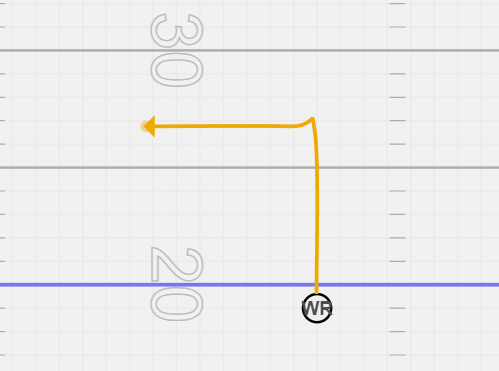
The out route is a horizontal pattern run by a receiver that breaks at a 90-degree angle away from the line of scrimmage. It’s used to get open against man coverage because it allows you to use your speed and create separation as you run downfield.
These are just some of the routes a wide receiver will run. To learn more about running routes, watch our video below.
Blocking As A Wide Receiver
Blocking is one of the things that separates a tremendous wide receiver from a good one. If a wide receiver consistently blocks his defender, he will get more playing time and often see the football.
This can make him better because of the opportunities to run with the football and make plays downfield.
Blocking is a skill that anyone can learn with some determination and desire.
It’s not hard to learn how to block, but it will take some effort on your part to master it.
To block effectively, you must sustain your block on a defender until the play is over or until someone takes his place.
Free Play Calling Guide
Know the exact play to call in every situation
- Pick the front you see. Get the plays that beat it.
- Pick the play they run. Get the stunt that stops it.
- Tap-to-answer tool for the sideline, plus the PDF for your binder.
Learn more about wide receivers by reading the articles below.
Learn To Stem & Stack At Wide Receiver
How to Beat Press Coverage In Football
Get Your Free Practice Template
Choose your high school or youth practice template below to start running more organized practices.